Building a registry before the baby arrives can feel like guessing. Your baby registry checklist can stay short: a safe sleep space, a car seat, diapering basics and a stroller. Start with safety, then add comforts.
This checklist is one part of our guide to baby gear essentials, so read that next if you want the wider picture.
| Item | Value |
|---|---|
| Crib slat spacing | No more than 2 3/8 inches (60 mm) apart |
| Crib mattress fit | Less than the width of two fingers between mattress and crib side |
| Replace the crib at | 35 inches in height, or when your child can climb or fall over the sides |
| Sleep surface incline | More than 10 degrees is not safe for sleep |
| Room sharing | At least the first 6 months of life |
| Secondhand crib age | Do not use cribs older than 10 years |
These figures come from Nationwide Children’s Hospital and the AAP’s safe sleep guidance. Safety rules and recommendations can change, so check the source before you rely on them.
Start with a safe place to sleep
According to Cedars-Sinai’s newborn guide, a newborn needs a warm and safe place to sleep, food, clothing and diapers. That makes the sleep space the first line on any registry.
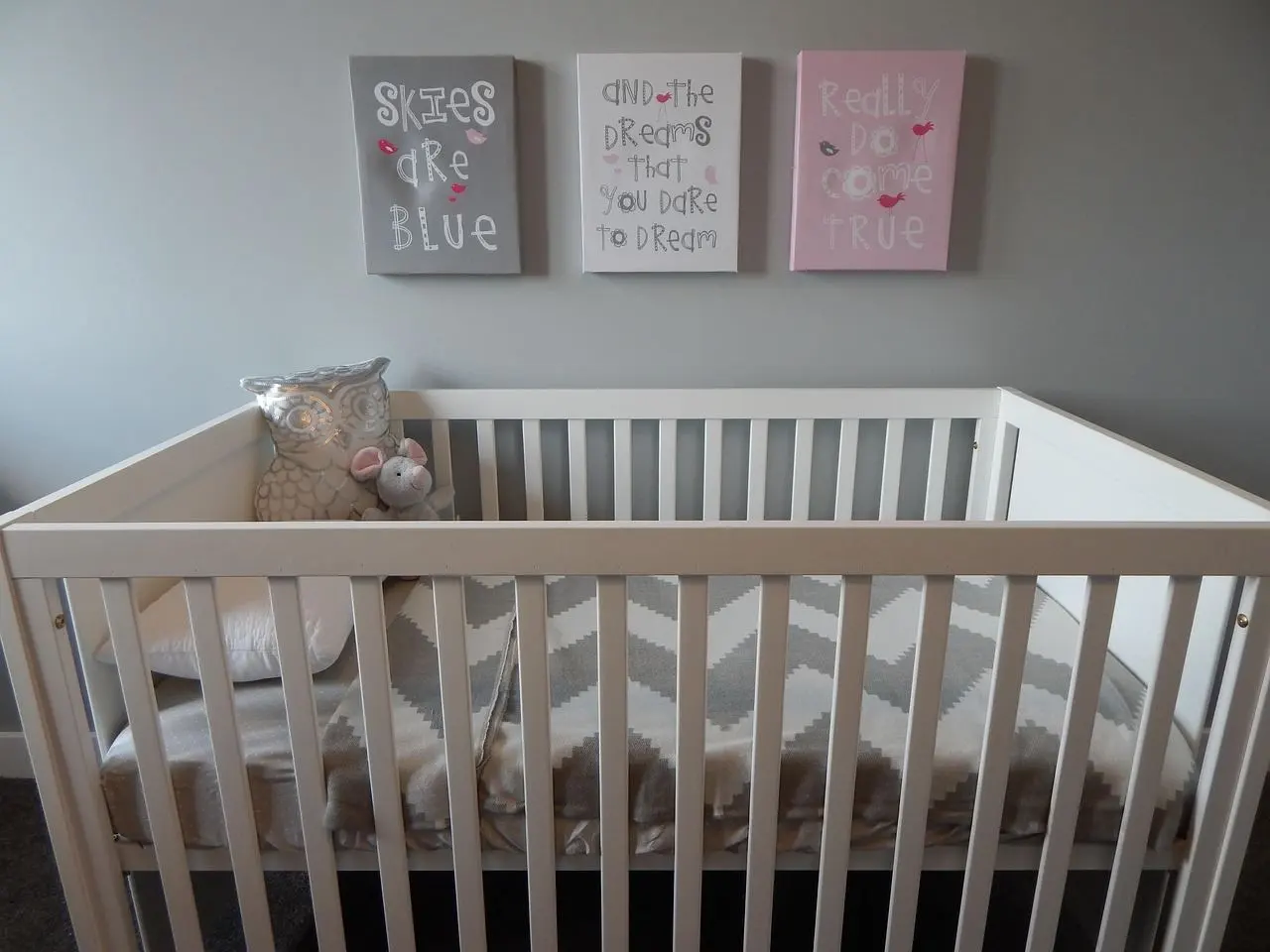
A crib has to meet federal safety standards, and Nationwide Children’s Hospital relays the CPSC spacing rule: slats no more than 2 3/8 inches (60 mm) apart. The mattress should leave less than the width of two fingers between its edge and the crib side.
A few other checks need no tape measure:
- Every slat is intact, with none missing or cracked.
- The mattress support is securely attached to the head and footboards.
- The head and footboards have no cutouts where a head could be trapped.
- All screws and bolts are present and tight.
- It is not a drop-side model, since those are no longer considered safe.
Your baby will outgrow the crib eventually. The same hospital guidance says to swap it for a bed when your child reaches 35 inches in height or can climb or fall over the sides, as noted by Nationwide Children’s. When you are ready to compare models, how to choose a crib is the next read.
For bedding, a fitted sheet is all the crib needs, and the AAP says nothing else should be in there with your baby. Instead of blankets for a newborn, Cedars-Sinai suggests appropriate-weight sleepwear or a sleep sack.
A bassinet or cradle is a portable choice for the early months. Look for a sturdy bottom with a wide base, smooth surfaces, legs with strong locks and a firm mattress that fits snugly, and follow the maker’s weight and size guidance, as Nationwide Children’s advises.
Sleep products to leave off your registry
Congress passed the Safe Sleep for Babies Act in 2022, and the AAP’s registry guidance says it bans inclined sleepers and crib bumpers that tie or snap on. Big-box stores will not stock them, but private sellers, thrift shops and garage sales may still list them.
Some popular registry items are fine for play but not for sleep. The AAP names these:
- Swings
- Rockers
- Bouncers
- Gliders
They hold a baby upright or inclined, so a sleeping baby’s head can fall forward and make breathing hard. Treat them as awake-time gear only.
The AAP’s safe sleep page adds that any surface inclining more than 10 degrees is not safe for sleep, per its policy explainer. It also warns against using products for sleep that are not marketed for infant sleep, with Boppy pillows and Dock-a-Tots as examples.
Sleep positioners are another one to skip. The AAP says these products have been linked with multiple deaths.
Car seat and stroller
Cedars-Sinai advises you to buy the car seat well before your due date. It also says the simplest, least expensive model often works as well as one with fancy features, so choose one that is easy for you to use and fits your vehicle.
Place the seat in the back of the vehicle. For a stroller, the same hospital guide lists what to look for:
- A wide base to prevent tipping
- A seat belt and crotch strap attached securely to the frame
- A five-point harness with straps over both shoulders, hips and between the legs
- Brakes that are easy to use and lock the wheels securely
- A shopping basket that sits low at the back, over or in front of the rear wheels
Do not hang bags from the handles, because they can make the stroller tip backward.
Diapering and the changing station
A changing table is convenient, but falls from a high surface can be serious. Cedars-Sinai recommends a sturdy, stable table with a 2 inch (5 cm) guardrail around all four sides and a slightly concave pad.
Always use the safety straps, but remember they do not replace supervision. Keep at least one hand on your baby at all times, and never step away, even when strapped in.
A tidy station also helps:
- Keep supplies within your reach but out of your baby’s reach.
- Keep disposable diapers out of your child’s reach, covered with clothing, since the plastic liner can be a suffocation risk.
- Do not let your baby play with a powder container.
When you start planning outings, our roundup of the best diaper bag options is the place to continue.
Extras, and how to vet everything
Once the essentials are covered, extras are a matter of taste. A glider or rocking chair should have arms wide enough to hold your baby comfortably, especially when breastfeeding, according to Children’s Hospital of Philadelphia. The same page notes that many baby stores offer a gift registry service for listing the items you prefer.
If a playpen is on your list, CHOP repeats the CPSC warning never to leave an infant in a mesh playpen or crib with the drop-side down. Only choose playpens that meet federal safety standards.
Before you add or accept anything, check for recalls. Cedars-Sinai points to SaferProducts.gov for that, and the AAP adds that a crib that is not new deserves an extra look on the CPSC website, with no use of one that is missing instructions or hardware or is broken, per its safe sleep guide.
A note on how this site works: this checklist names no specific products and uses no affiliate links. Where other pages do carry them, they are disclosed, and commissions never decide what is recommended. For questions about your own baby, ask your pediatrician.
Frequently asked questions
What if my baby falls asleep in the car seat?
Show answer
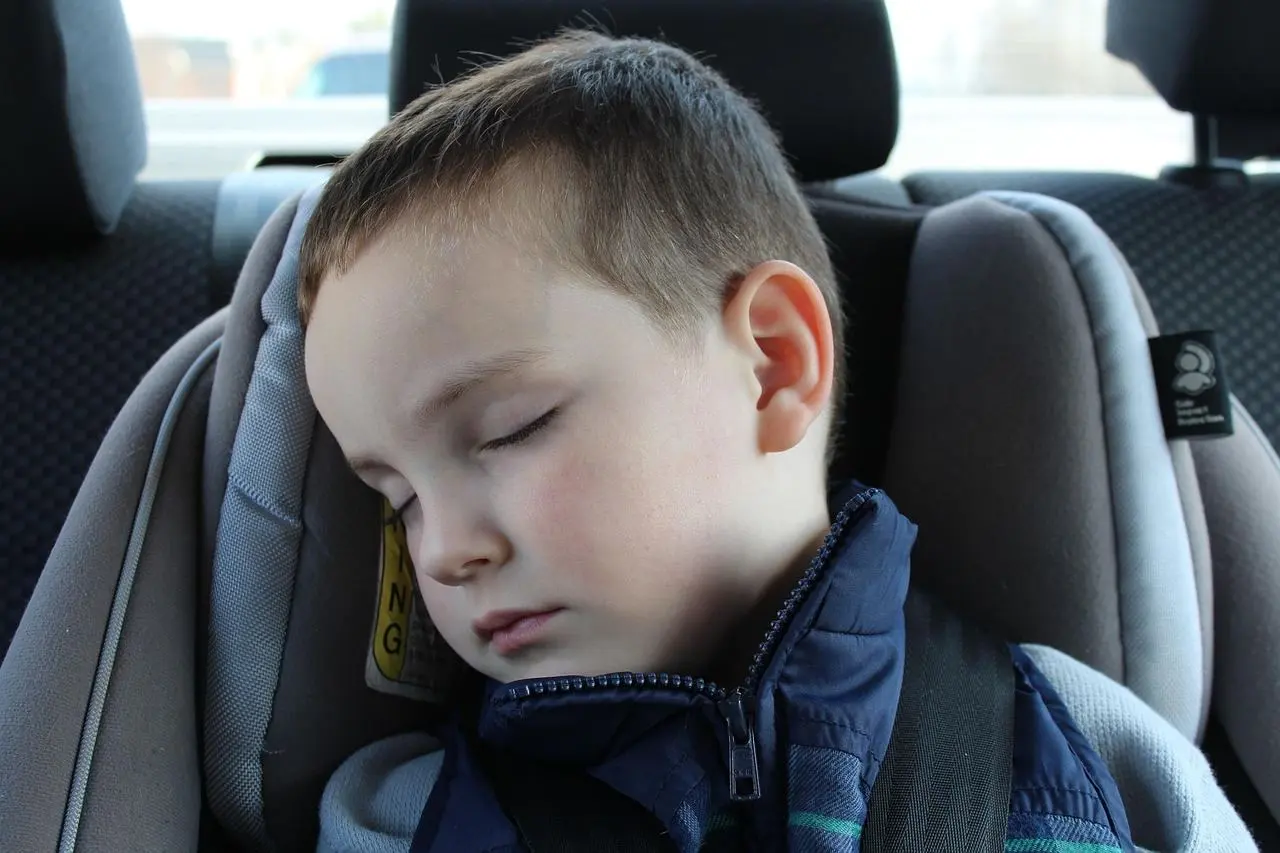
Car seats are built for travel, so treat the nap as a ride-only event. The AAP says dozing in a moving car is generally safe, but infant seats are not made for sleep outside your vehicle, so move your baby to a flat, firm surface once you stop.
How long should my baby sleep in my room?
Show answer
The AAP advises keeping a separate sleep space in your bedroom for at least the first 6 months of your baby’s life, rather than sharing a bed. It says this arrangement can decrease the risk of SIDS by as much as 50%.
Is a hand-me-down crib okay?
Show answer
Only if it is complete, unmodified and free of recalls. Nationwide Children’s Hospital says not to use cribs older than 10 years, or any that are broken or modified.
Should I buy an infant-only or a convertible car seat?
Show answer
Either can work, but plan ahead. Cedars-Sinai notes that most babies outgrow infant-only seats before age 2, and that many convertible seats allow rear-facing travel for 2 years or more.