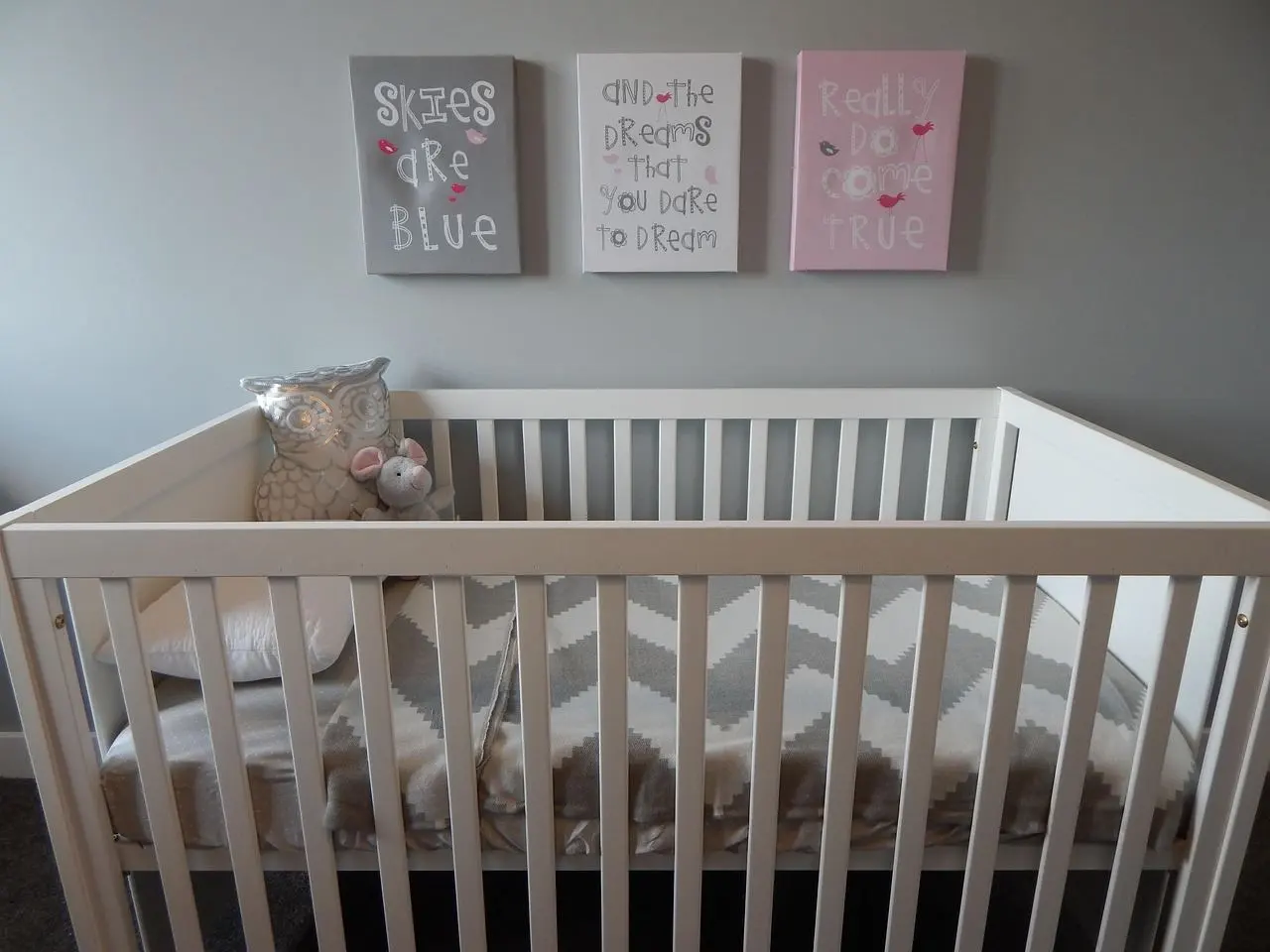
Feeling lost among all the cribs? Here is how to choose a crib, so you can shop with confidence: start with a mattress that meets the federal crib mattress standard, then check fit, firmness and labels.
This guide is part of our baby gear essentials collection, so you can see how one big purchase fits the rest of your setup.
| Item | Value |
|---|---|
| Rule publisher | Consumer Product Safety Commission |
| Rule published | 02/15/2022 (87 FR 8640) |
| Rule effective date | August 15, 2022 |
| Voluntary standard it builds on | ASTM F2933-21 |
| Docket | CPSC Docket No. 2020-0023 |
These figures come from the Federal Register notice on crib mattresses. Rules and standards can change, so check the source before you rely on them.
What the federal crib mattress rule covers
The Consumer Product Safety Commission published its Safety Standard for Crib Mattresses on 02/15/2022, and the rule took effect on August 15, 2022, according to the Federal Register. That is the status as of the notice’s 02/15/2022 publication, so confirm any later updates with the agency.
The rule discusses the voluntary standard ASTM F2933-21 and then sets out a mandatory standard. Its sections include a cyclic test for coil or spring lacerations, a test for mattress compression from fitted sheets, and dimension requirements for after-market non-full-size crib mattresses.
It also covers a mattress firmness test and changes to the safety information that comes with the product. The document is long, at 45 pages, but you do not need to read it to benefit: you only need to know which questions it raises.
One caution matters here. The rule is about mattresses, not crib frames, so treat it as one layer of your decision and follow up-to-date guidance from the CPSC and your pediatrician for everything else.
Start with the mattress, then match it to the crib
A crib is only as good as the surface your baby sleeps on, which is why the mattress deserves your first look. Many shoppers pick a frame for its style and add a mattress later. Reversing that order keeps the safety-critical piece in front of you.
The rule lists fit as its own hazard pattern, including mattress compression and after-market mattresses for play yards and non-rectangular, non-full-size cribs, as the Federal Register notice sets out. In plain terms, a mattress that does not suit the crib it goes in is a recognised concern.

If a crib comes with its own mattress, read the label and the instructions before you buy. If you buy the mattress separately, make sure the maker states which crib sizes and shapes it is intended for.
Which hazards should shape your checklist?
The rule groups reported problems into hazard patterns. Reading that list is a quick way to learn what a careful shopper looks at, according to the Federal Register notice.
- Chemical and flammability hazards, so look for clear compliance labelling.
- Coil or spring hazards, which is why the rule adds a cyclic test for coil or spring lacerations.
- Use in a play yard, so do not assume a crib mattress belongs in another product.
- Expand or inflate concerns, for mattresses that change shape.
- Face in mattress and softness patterns, which connect to the firmness test.
- Fit issues, including compression and after-market sizes.
- Mattress falling apart, so inspect stitching and edges in the store.
None of this replaces medical advice. For sleep-safety questions, rely on official pediatric and safety guidance.
A buying checklist you can use in the store
Use these steps to compare any crib and mattress pairing, whether you shop online or in person.
- Find the manufacturer’s statement of which mattress size and shape the crib takes.
- Check that the mattress label refers to the federal crib mattress standard.
- Press on the mattress and confirm it feels firm rather than plush.
- Look for exposed coils, loose seams or any part that seems to be coming apart.
- Try a fitted sheet made for the mattress and see that it sits flat without squeezing the mattress.
- Keep the instructions and labels, because the rule also changes the safety information that ships with the product.
Our site is independent, and commissions never decide what we recommend or how anything ranks. This page names no products and makes no claim that any item was tested.
How a crib fits into your wider plan
A crib is rarely your only sleep purchase. If you are weighing a smaller first bed, our guide to bassinet vs crib compares the two approaches.
When you are ready to organise everything else, the baby registry checklist helps you place the crib and mattress alongside other must-haves.
Take your time. Your list will be clearer once you have settled the mattress question.
Frequently asked questions
Does the federal rule cover the crib frame too?
Show answer
The document we reviewed is titled as a crib mattress standard, so it speaks to the mattress. Ask the retailer or maker about frame compliance, and check CPSC guidance for it.
Can I use a play yard mattress in a full-size crib?
Show answer
The rule treats play yard use as its own hazard pattern, so keep each mattress in the product it was made for. When unsure, follow the manufacturer’s instructions.
Is a softer mattress more comfortable for a baby?
Show answer
Softness appears as a hazard pattern in the rule, which is why a firmness test is part of the mandatory standard. Ask your pediatrician for guidance rather than judging comfort by feel.
Where can I read the original rule?
Show answer
The Federal Register page links to the official PDF. The site itself says it is an unofficial informational resource, so anyone relying on it for legal research should verify against an official edition.