
Trying to settle bassinet vs crib before the baby arrives? You rarely need both. A bassinet is a compact, short-term bed for the early months, while a crib is the one that lasts, so pick by space and budget.
This guide sits inside our wider look at baby gear essentials, where sleep is just one of several early purchases.
| Item | Value |
|---|---|
| CPSC infant sleep product rule published | June 23, 2021 |
| Rule effective date | June 23, 2022 |
| Age scope of an “infant sleep product” | Up to 5 months of age |
| Sleep surface angle counted as inclined | Greater than 10 degrees from horizontal |
| Sleep surface angle counted as flat | Equal to or less than 10 degrees |
| Children covered by “durable infant or toddler products” | Under the age of 5 years |
These figures come from the Federal Register final rule on infant sleep products. Rules and product standards can change, so check the source before you rely on them.
What a bassinet and a crib each do
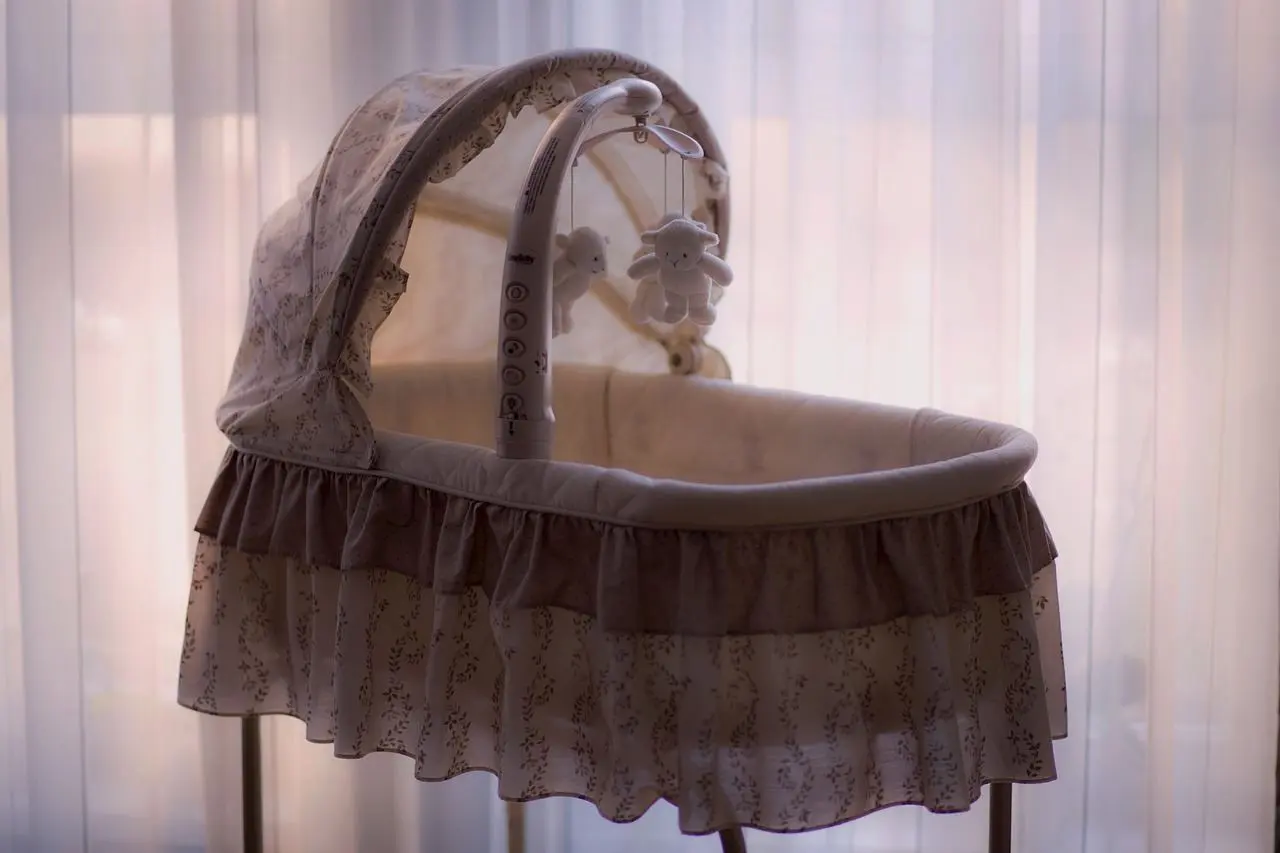
A bassinet is a small, lightweight bed made for the earliest months. It is easy to park beside your own bed, carry between rooms, or fit into a tight corner of a small bedroom.
A crib is a full-size bed made for much longer use. It takes more floor space and usually stays in one room, but you buy it once and it keeps working long after a bassinet has been outgrown.
Federal safety law treats both as the same broad kind of product. Under the Consumer Product Safety Improvement Act, as described in the CPSC’s June 2021 final rule, cribs and bassinets and cradles are both listed examples of durable infant or toddler products, a label for items intended for children under the age of 5 years.
What the federal infant sleep rule means for shoppers
In its June 2021 final rule, the CPSC created a category called infant sleep products. It covers products marketed or intended to provide a sleeping accommodation for an infant up to 5 months of age that no other mandatory standard already covers.
The rule took effect on June 23, 2022, according to the Federal Register notice. The background discussion separates inclined products, with a sleep surface angle greater than 10 degrees from horizontal, from flat ones at or below 10 degrees.
The same CPSC document explains that manufacturers of these products must run consumer registration card programs and meet third-party testing and certification requirements. For you, that means filling in the registration card or form, so the maker can reach you if a safety notice is ever issued.
How the two compare in daily life
The differences that matter most are practical rather than technical. Think about these before you compare prices:
- Space: a bassinet fits in a bedroom corner; a crib needs a dedicated spot, ideally one you can reach easily.
- Portability: a bassinet moves with you from the bedroom to the living room; a crib is effectively fixed once assembled.
- Useful life: a bassinet has a short window set by its label; a crib covers a far longer stretch.
- Cost: a bassinet is an extra purchase on top of a crib, while a crib alone is a single purchase.
- Assembly: bassinets usually go together quickly; cribs take longer and are harder to relocate.
If you lean toward a crib, our guide on how to choose a crib covers the details that decide a good fit for your room.
Which should you buy first?
Work through these steps in order, and the answer usually becomes clear:
- Measure the spot where your baby will sleep for the first months, including walkway room.
- Decide whether you want the baby in your room or in a separate nursery.
- Read the manufacturer’s age, weight, and developmental limits on each product’s label.
- Compare the real cost per month of use, not just the sticker price.
- Register whatever you buy as soon as it arrives.
A bassinet-first plan suits small homes and parents who want the baby within arm’s reach at night. Skipping straight to a crib suits tighter budgets and anyone with a spare room ready to go.
Safety checks before you buy
Treat a retailer listing as a starting point, not proof of safety. For sleep position, bedding, and room-sharing questions, follow guidance from the American Academy of Pediatrics and the CPSC rather than product marketing.
- Check that the product’s label names a clear age or developmental limit.
- Search recall notices for the exact brand and model, especially for secondhand finds.
- Confirm that you have all parts, the manual, and the model number before use.
- Look closely at inclined products and read the sleep surface description on the label.
Once the sleep setup is settled, it is worth reading about the types of strollers before your next big purchase.
Frequently asked questions
Do I really need both a bassinet and a crib?
Show answer
No. Plenty of families buy only a crib, and others buy a bassinet for the first months and add a crib later. Your room size and budget should decide it.
Is an inclined sleeper the same as a bassinet?
Show answer
Not necessarily. The CPSC’s rule discussion distinguishes inclined sleep surfaces from flat ones, so read the product description closely rather than assuming from the name.
Do I need to register my baby’s sleep product?
Show answer
Registering is a good habit. The CPSC document says makers of durable infant products must offer registration card programs, and using it helps them reach you about problems.
Is a secondhand crib or bassinet a good idea?
Show answer
It can be, if you can confirm the model has no open recalls and every part and instruction is present. When you cannot verify that, buying new is the safer choice.