
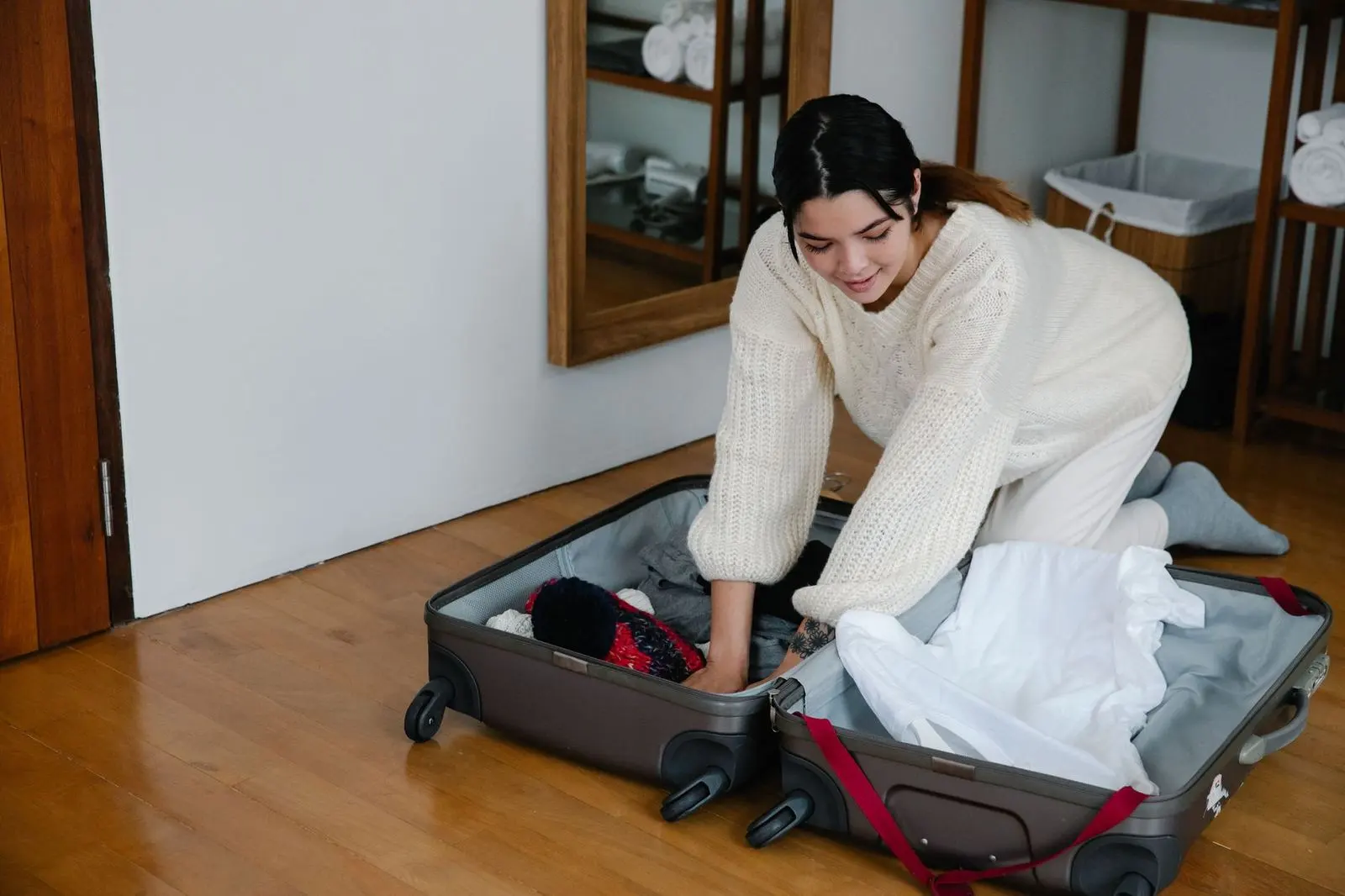
Packing a hospital bag feels like a guessing game when labor could start any day. This hospital bag checklist gives you the short answer: pack a month or two before your due date, and keep it light.
If you’re collecting more guidance for the weeks ahead, our parenting tips for new parents guide pulls it together in one place.
| Item | Value |
|---|---|
| When to pack the bag | A month or two before your due date |
| Typical stay after a vaginal delivery | About 24 hours |
| Typical stay after a C-section | 2-3 days |
| Nursing or sports bras to pack | Two or three bras |
| Sleepers for the trip home | At least one sleeper |
These figures come from Cleveland Clinic and Texas Children’s. Hospital policies and advice can change, so check with your own hospital before you rely on them.
When should you pack your hospital bag?
The calmest approach is to pack early. Cleveland Clinic suggests packing a month or two before your due date, so an early arrival doesn’t leave you scrambling.
UPMC recommends starting a few weeks in advance and keeping the conditions of your pregnancy and the possibility of early labor in mind. Buying supplies ahead of time also means you are simply packing, not waiting on deliveries. If you’re budgeting for those purchases, our guide on how much does a baby cost first year gives you the wider picture.
Size the bag around your length of stay. Texas Children’s says most women stay about 24 hours after a vaginal delivery and 2-3 days after a C-section. It also advises planning for a longer stay even if you expect to leave sooner.
Whatever the length, leave empty space. Cleveland Clinic notes you will bring items home from the hospital, such as:
- peri bottles
- diapers and wipes
- mesh underwear
- maternity sanitary pads
Keep the bag easy to reach as well. UPMC suggests stashing it in your car or by your front door once it’s packed, and avoiding several stuffed bags that make you dig for one pair of underwear.
What to pack for you
Most lists agree on a short core of essentials. UPMC boils its list down to 11 essential items, then adds nice-to-haves on top.
Documents and phone
- Photo ID and insurance card
- Your birth plan, if you have one, printed in a folder
- A list of your medications
- Your phone and a charger
The photo ID and insurance card matter most if you haven’t preregistered, since Cleveland Clinic says you’ll be showing them to a lot of people. It also suggests a folder for your birth plan and the paperwork you’ll be handed. Talk through your medications with your provider ahead of time and bring a list.
Clothing and comfort
- Loose, comfortable clothes for the ride home
- Nonslip socks or slippers, plus slip-on shoes
- Nursing bras or sports bras
- Your own pillow or blanket
- Nonperishable snacks and drinks
Plan on maternity clothes for going home. Cleveland Clinic points out that, unlike in the movies, your body takes time to adjust, and it suggests two or three nursing or sports bras. If you plan to formula-feed, it recommends snug sports bras for extra support.
Before you stock up on snacks, ask about the rules. UT Southwestern advises checking your doctor’s philosophy on eating and drinking during labor and the hospital’s policy on what visitors can bring into your room.
Toiletries and nice-to-haves
Some hospitals provide toiletries, but Cleveland Clinic says you may feel better using your own lip balm, soap, shampoo, hairbrush, deodorant and toothbrush. It also mentions nipple cream, which many hospitals provide, though it’s better not to gamble on it.
If there’s space, UPMC lists a few comforts worth considering:
- A breastfeeding pillow
- A cozy robe
- An eye mask
- A white noise app, books or earbuds
- A small table fan
Sore muscles are common whichever way you deliver, so Cleveland Clinic suggests massage aids like a tennis ball or a hand-held massager.
What to pack for baby
Your newborn needs far less than you might expect. Texas Children’s says its hospital provides most of what a newborn needs during the stay, including diapers, wipes, swaddling blankets and the first bath supplies.
That means the baby’s bag is mostly about the trip home. Cleveland Clinic says you need at least one sleeper to bring your baby home in, and a couple is safer. Choose sleepers that aren’t too tight, and consider a size up in case your baby is larger than expected.
UT Southwestern suggests packing two baby outfits, one for photos and one to wear home, since the first may get dirty. It adds that many hospitals don’t provide socks and mittens for newborns, so policies differ and a quick call is worthwhile.
The same source reminds you that the blanket you pack is for keeping baby warm on the way home, not for the crib or bassinet. For safe sleep and car seat use, follow official pediatric and safety guidance. Once the bag is ready, our newborn must haves checklist covers what to have waiting at home.
What your partner or support person should bring
Your support person is not receiving care, so they need to look after themselves. Cleveland Clinic and UPMC offer similar lists:
- Small bills or cash for vending machines
- A change of clothes they don’t mind staining
- Toiletries and any daily medications
- Slippers, socks and comfortable sleep clothes
- Chargers, plus a laptop, tablet or handheld game for quiet hours
- Their own snacks
Cleveland Clinic points out that small bills are a must when a vending machine is the only option. UPMC’s partner list also includes snacks, so they don’t steal yours.
What to leave at home
Valuables are the first thing to skip. Cleveland Clinic warns that some hospitals require you to remove jewelry, including a wedding ring, particularly for a C-section, so ask your obstetrician or midwife about the facility’s policy.
Next, skip clothes you love. The same source says to be ready to throw away anything you wear to and from the hospital, and UPMC adds perishable food, strong scents, work and an overabundance of baby clothes to its skip list.
A few items depend on the hospital, so sources disagree:
- Underwear and pads: Cleveland Clinic says the hospital supplies mesh postpartum underwear and pads, while UT Southwestern says its pads are bulky and suggests maternity underwear or thin nighttime napkins.
- Contact lenses: Texas Children’s advises leaving them home and bringing glasses, while other lists include them.
- Medications: Cleveland Clinic says the hospital pharmacy can cover most needs with pre-planning, so share your list ahead of time.
A quick call to your birthing facility settles most of these questions.
Frequently asked questions
Should I bring my own breast pump?
Show answer
It depends on your plans. UT Southwestern says women typically don’t need to, unless they expect to pump exclusively and want lactation nurses to help them get comfortable with the device. Cleveland Clinic’s nurse manager says many hospitals encourage a personal pump with sanitized parts if you plan to breastfeed and pump, so ask yours.
Do I need to pack the car seat?
Show answer
Not for the drive in, but you will need it for the drive home. UPMC suggests your partner make sure it’s ready before discharge, and UT Southwestern says having it in the car early helps if you leave sooner than planned or need a car seat test. Check your car seat manual and official safety guidance for installation.
Can I bring candles to make the room calmer?
Show answer
Skip real flames. Cleveland Clinic calls open flames a big no-no in a hospital and suggests flameless candles if you want a calming mood.
Do we still need a separate camera?
Show answer
Usually not. UT Southwestern notes a smartphone or tablet can handle photos and videos, as long as you bring a charger and have plenty of memory.