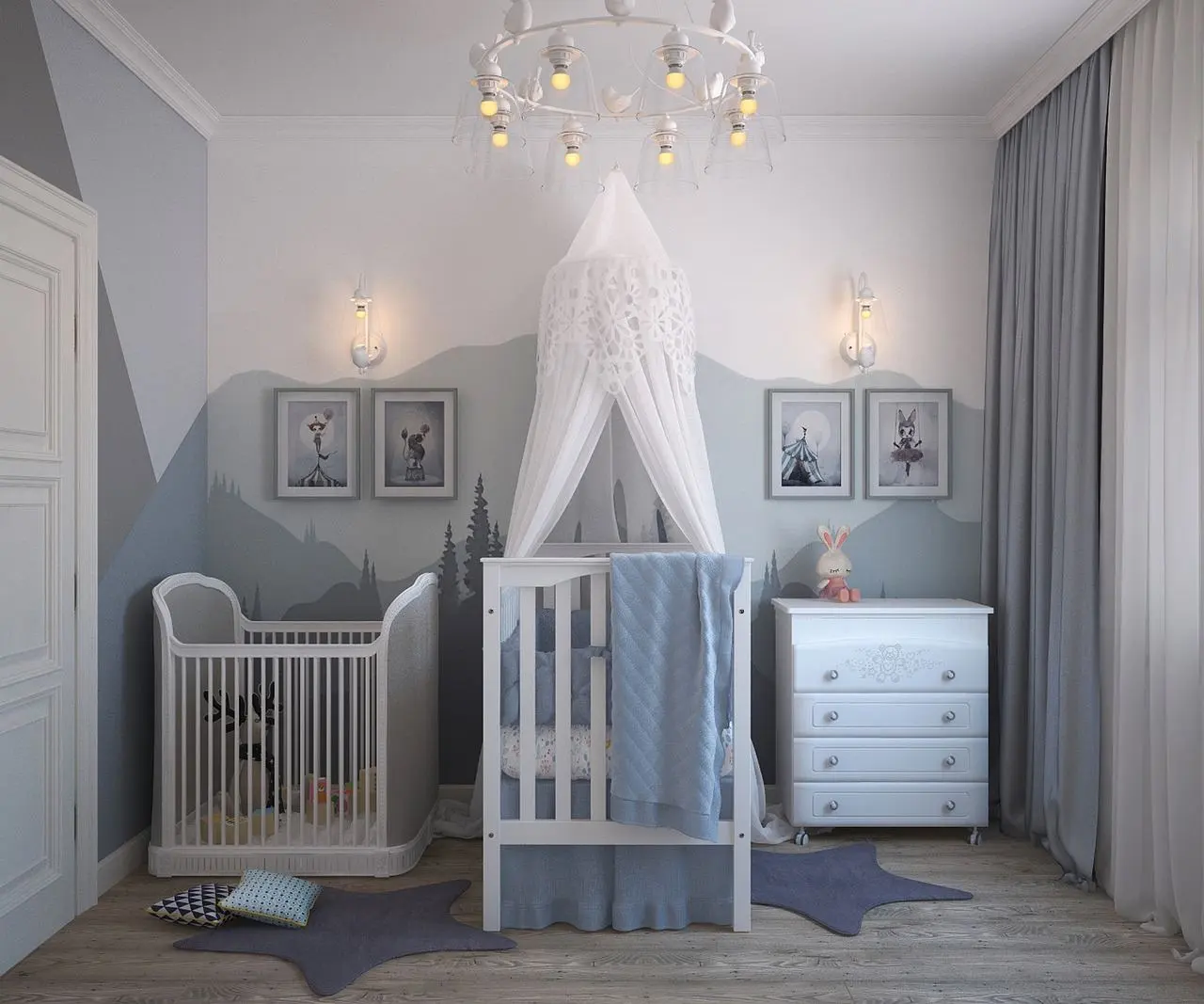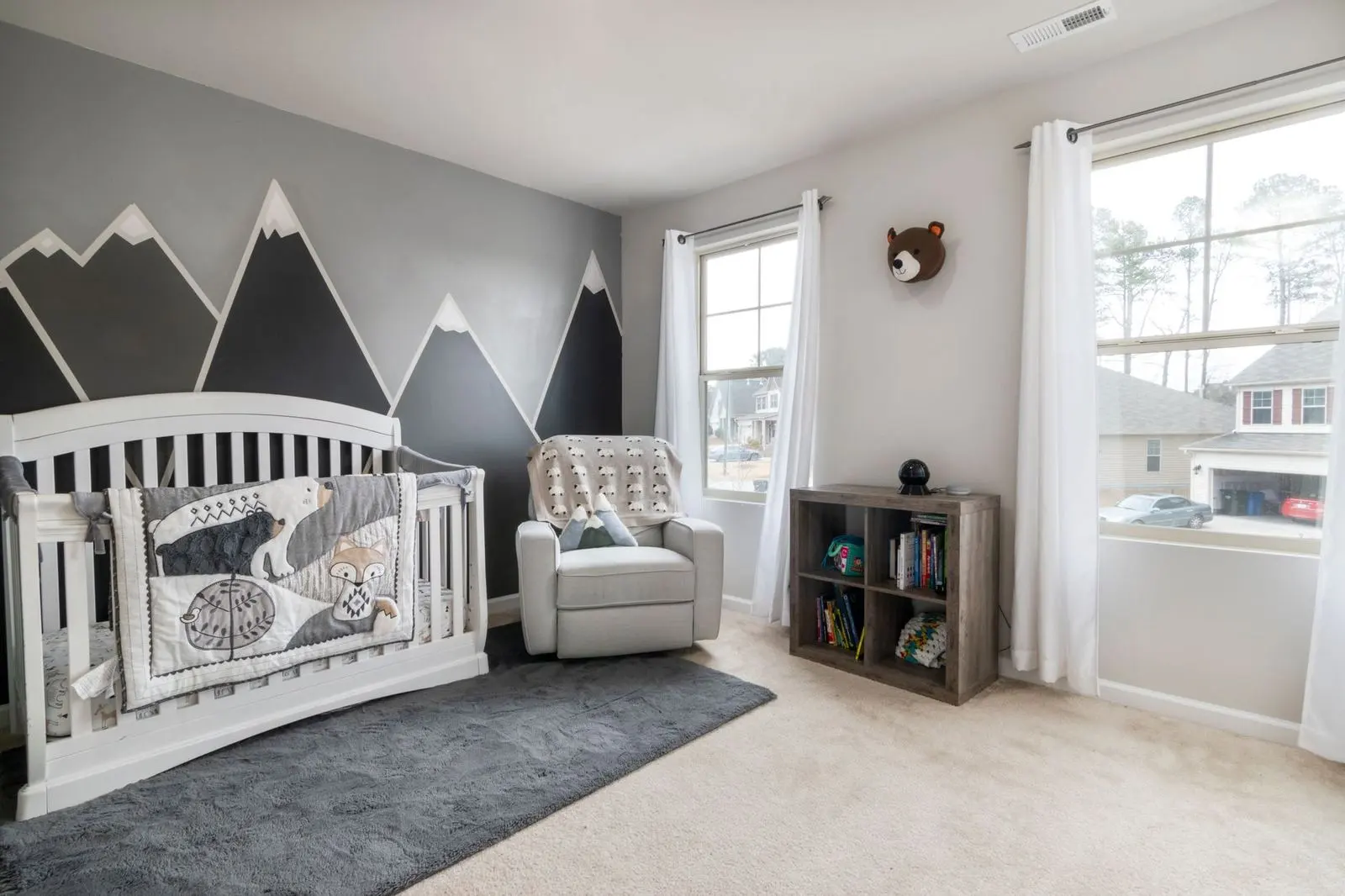
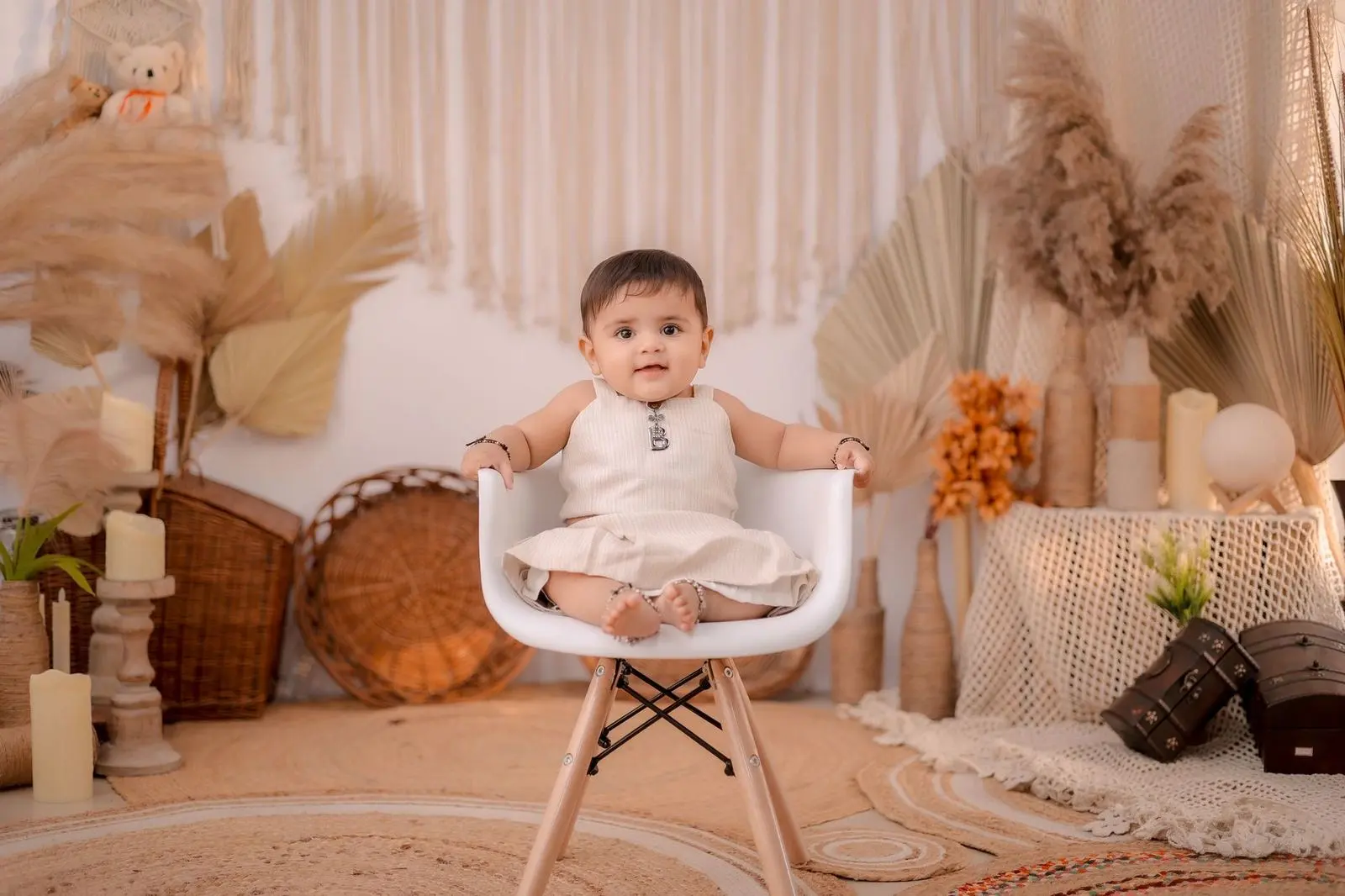
You want a warm, earthy room that still feels safe for a newborn. The best boho nursery ideas put texture in rugs, baskets and seating, and keep the crib itself plain.
This guide sits inside our wider set of nursery ideas, with a focus on the boho look.
| Item | Value |
|---|---|
| Babies in the US who die suddenly and unexpectedly while sleeping, each year | Around 3,500 babies |
| Widest gap between crib slats | 2-3/8 inches |
| Sleep surface incline that is unsafe | More than 10 degrees |
| Recommended room sharing, without bed sharing | At least the first 6 months |
| Largest crib recall in history (2009) | 2.1 million cribs |
These figures come from the AAP’s safe sleep guide and its suitable sleeping sites page on HealthyChildren.org. They can change, so check the source before you rely on them.
Start with the sleep space, then add the boho
Boho style is built on layers, and the crib is the one spot that stays bare. The AAP’s safe sleep guide says a firm, flat sleep surface is the base, and it calls any surface that inclines more than 10 degrees unsafe for sleep (AAP safe sleep guide).
The same guide opens with a sobering figure: around 3,500 babies in the United States die suddenly and unexpectedly while sleeping every year. Treat its advice as the rulebook and the decor as the finishing touch.
Be careful with soft, trendy sleep gear. The guide says baby nests and pods count as a safe option only if they meet the June 2021 CPSC rule, and it names Boppy pillows and Dock-a-Tots as examples of products not marketed for infant sleep.
Nothing here replaces the official guidance, so read the full AAP pages before you finalize the room.
Which natural tones suit a boho nursery?
A boho palette borrows from sand, clay, plants and wood. Pick a warm neutral as the main colour, then add one or two earthy accents.
- Base: warm white, cream or oatmeal on the walls and curtains.
- Earth accents: terracotta, clay or rust in a pillow, a vase or a print.
- Soft greens: sage or olive, in plants and small textiles.
- Wood tones: light oak, bamboo, cane and rattan.
A small palette keeps a mix of textures looking calm instead of cluttered. If you want pattern, a subtle botanical wallpaper or a colour-washed wall does the job well.
That also fits the AAP’s sleeping sites advice, which limits over-the-crib wall decorations to painted walls and wallpaper.
Texture layers that live away from the crib
Since the crib stays plain, put your texture everywhere else. These pieces give the room its boho character:
- Rugs: a jute, wool or flatweave rug in oatmeal or a faded pattern, with a pad underneath to keep it flat.
- Baskets: seagrass or rattan baskets for blankets, diapers and books, kept near the changing area.
- Seating: a cane or rattan chair with a linen cushion for night feeds.
- Curtains: airy linen or cotton gauze in cream.
- Greenery: faux or dried stems in a vase on a high shelf, well out of reach.
Mix at least three materials, such as wood, woven fibre and linen, so no single surface feels flat.
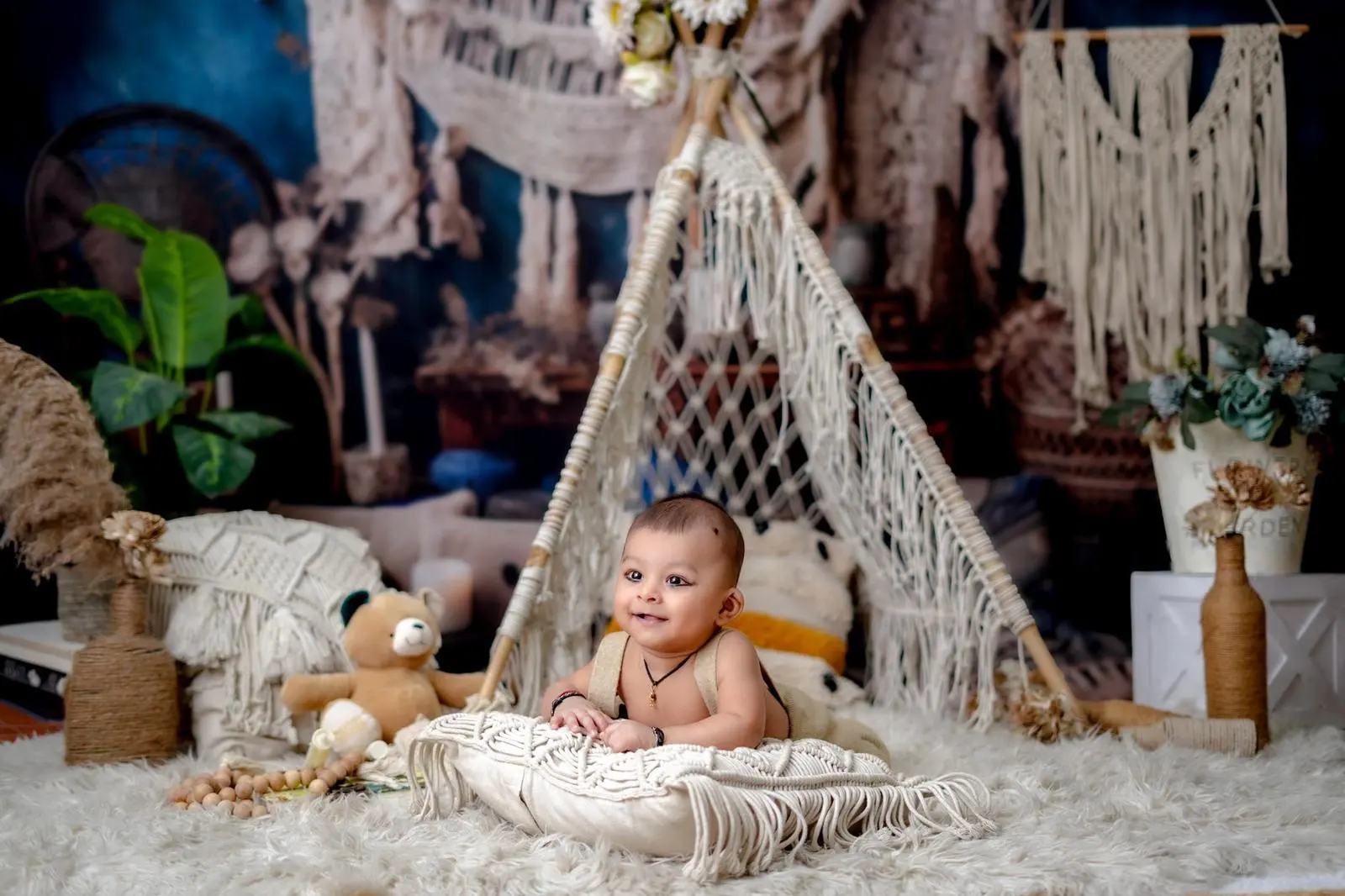
Macramé and woven hangings are classic boho, but they need a sensible spot. The AAP’s sleeping sites page warns that picture frames and mirrors over cribs are injuries waiting to happen, so by the same logic keep fibre pieces off the wall above the crib.
Hang them on another wall instead. Our guide to nursery wall decor ideas has more options for that wall.
Boho bedding: keep the crib bare
The AAP page recommends that nothing but a snugly fitted sheet go in the crib with your baby during the first year (suitable sleeping sites). So boho bedding means choosing a natural-toned cotton or muslin sheet in cream, sage or a soft print.
Leave these out of the crib and show them elsewhere:
- Bumpers and pillows.
- Stuffed animals and most toys.
- Quilts and throw blankets, which look lovely draped over a chair or a ladder shelf instead.
Check the crib itself as well. Slats should be no more than 2-3/8 inches apart, and the page says to avoid any crib that does not meet the 2011 standard. A vintage crib suits a boho room, yet older cribs may not meet that standard.
The page also notes that injuries from drop-side rails led to the largest crib recall in history, 2.1 million cribs in 2009, after which full-sized cribs had to be made with four immovable sides (AAP sleeping sites page).
Furniture placement, mobiles and light
Place the crib well away from windows and no less than an arm’s reach from any dresser or tabletop, as the AAP sleeping sites page suggests. That leaves a rattan dresser, a basket stack or a plant shelf on the far side of the room.
A wooden-bead or felt-ball mobile suits the style, but it is optional. The same page says to take it down once your baby can sit up.
Warm, low light adds to the earthy mood. Our guide to nursery lighting ideas goes deeper on lamps and dimmers.
Frequently asked questions
Is a boho nursery safe for a newborn?
Show answer
It can be, when the sleep space follows the AAP’s guidance first: a bare crib with a tight fitted sheet, a firm mattress and no soft extras. Texture then goes on the floor, the chair, the curtains and the far walls.
Can I use a vintage or hand-me-down crib?
Show answer
Check it carefully. The AAP’s sleeping sites page says all new cribs must meet the slat standard but older cribs may not, and its safe sleep guide advises checking the CPSC website to see whether a crib has been recalled (AAP safe sleep guide). Skip any crib with missing hardware or no instructions.
Should I style the whole room if my baby sleeps near me?
Show answer
Plan for both spaces. The AAP advises sharing a room, not a bed, for at least the first 6 months, and says room sharing can decrease the risk of SIDS by as much as 50% (AAP safe sleep guide). A bassinet that meets federal standards beside your bed may be the first sleep spot, so keep that corner simple too.