Tight on space and worried a baby room will feel crowded? These small nursery ideas show how to fit a safe crib, smart storage and a calm look into a compact room.
The wider collection of nursery ideas covers larger rooms and other styles too.
| Item | Value |
|---|---|
| Maximum gap between crib slats | 2-3/8 inches |
| Crib made after | 2011 |
| Loose mattress test | 2 fingers fit between mattress and crib side |
| Hanging mobile removal | around 5 months of age |
| Playpen made after | 2013 |
These figures come from the AAP’s Suitable Sleeping Sites guidance and the Nationwide Children’s nursery safety page. Standards and recommendations can change, so check the sources before you rely on them.
Start with the crib, then plan the room around it
In a compact room the crib is the biggest piece, so choose it first and fit everything else around it. A safe crib has slats no more than 2-3/8 inches apart, and the AAP’s sleeping sites guidance says to avoid any crib that does not meet the 2011 standard. That matters most if you are tempted by a hand-me-down in a small space.
Fit matters as much as size. Nationwide Children’s Hospital says a mattress is too loose if 2 fingers fit between it and the side of the crib, and it also warns against cribs with loose or missing pieces.
Many cribs have an adjustable mattress height, which can help one crib stay useful as your baby grows. The AAP guidance suggests keeping the mattress high while your newborn is not moving much, then lowering it as they sit and stand.
Layouts that work in a small room
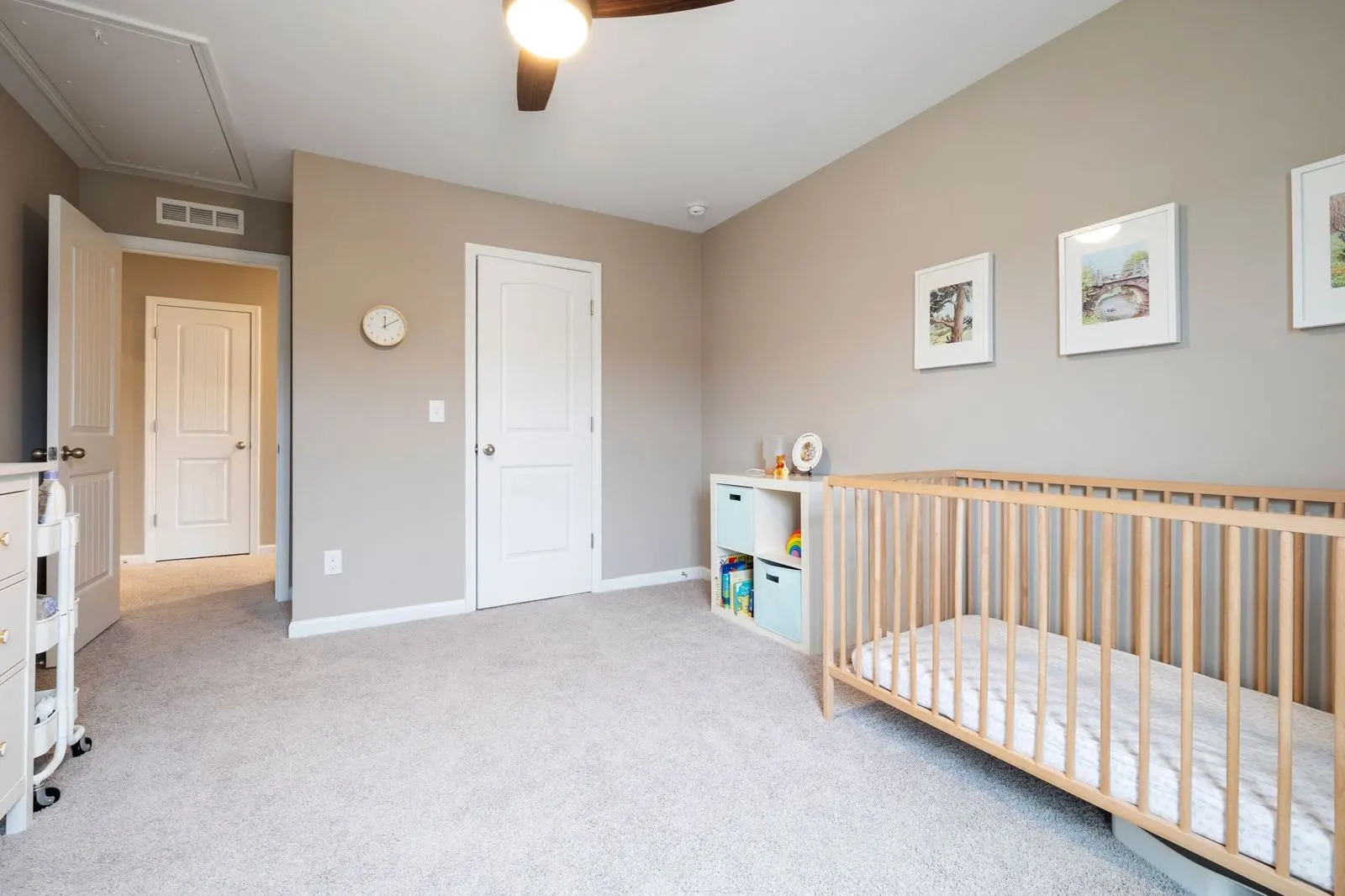
The best spot for a crib is well away from windows and at least an arm’s reach from any dresser or tabletop, according to the AAP’s sleeping sites advice. In a narrow room, that usually points to a free wall or a corner that the window and dresser do not touch.
Your first layout may not be the nursery at all. The AAP’s safe sleep guide recommends sharing a room, but never a bed, for at least the first 6 months. A bassinet, portable crib or play yard that meets Consumer Product Safety Commission standards can fill that role beside your bed.
If you go with a play yard, Nationwide Children’s advises choosing one made after 2013, the date of the last safety updates it lists.
Once you know where the baby sleeps, plan the rest in this order:
- Measure the room and mark the crib position with painter’s tape.
- Place the dresser or changing station where it cannot be reached from the crib.
- Keep a clear path from the door to the crib for night-time visits.
- Add a compact chair or floor cushion last, only if space remains.
Leaving the walkway clear makes a small room feel larger and makes night feeds easier.
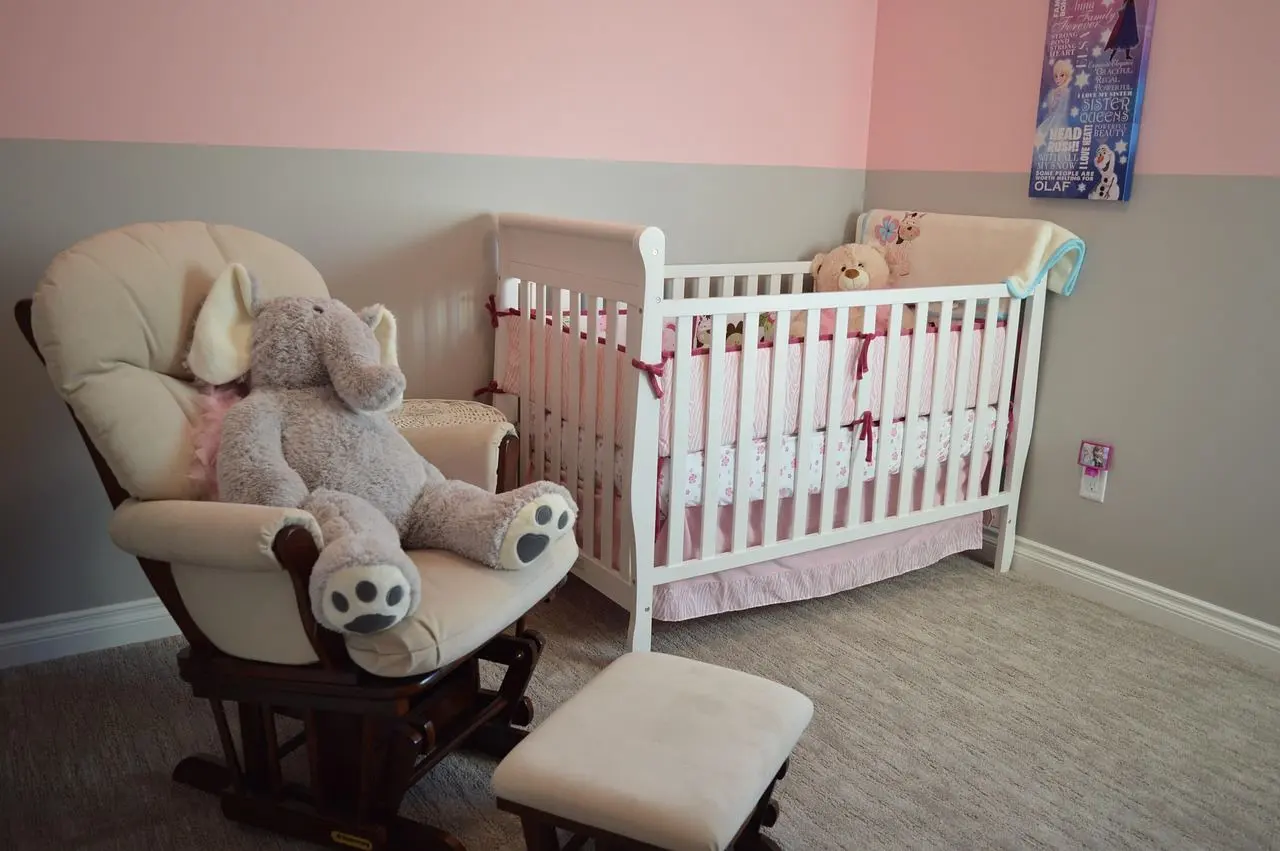
Storage that earns its space
A dresser topped with a changing pad does the work of two pieces of furniture. If you set up a changing station, use the safety belt and keep a hand on your baby the whole time, as Nationwide Children’s advises. Follow the manufacturer’s instructions for securing any tall furniture.
Look for storage that uses height and hidden corners rather than floor space:
- Closet organizers with shelves and hanging pockets for clothes and linens
- Over-the-door racks for diapers, wipes and spare sheets
- Lidded baskets on a dresser top for small daily items
- A slim rolling cart that tucks beside the changing station
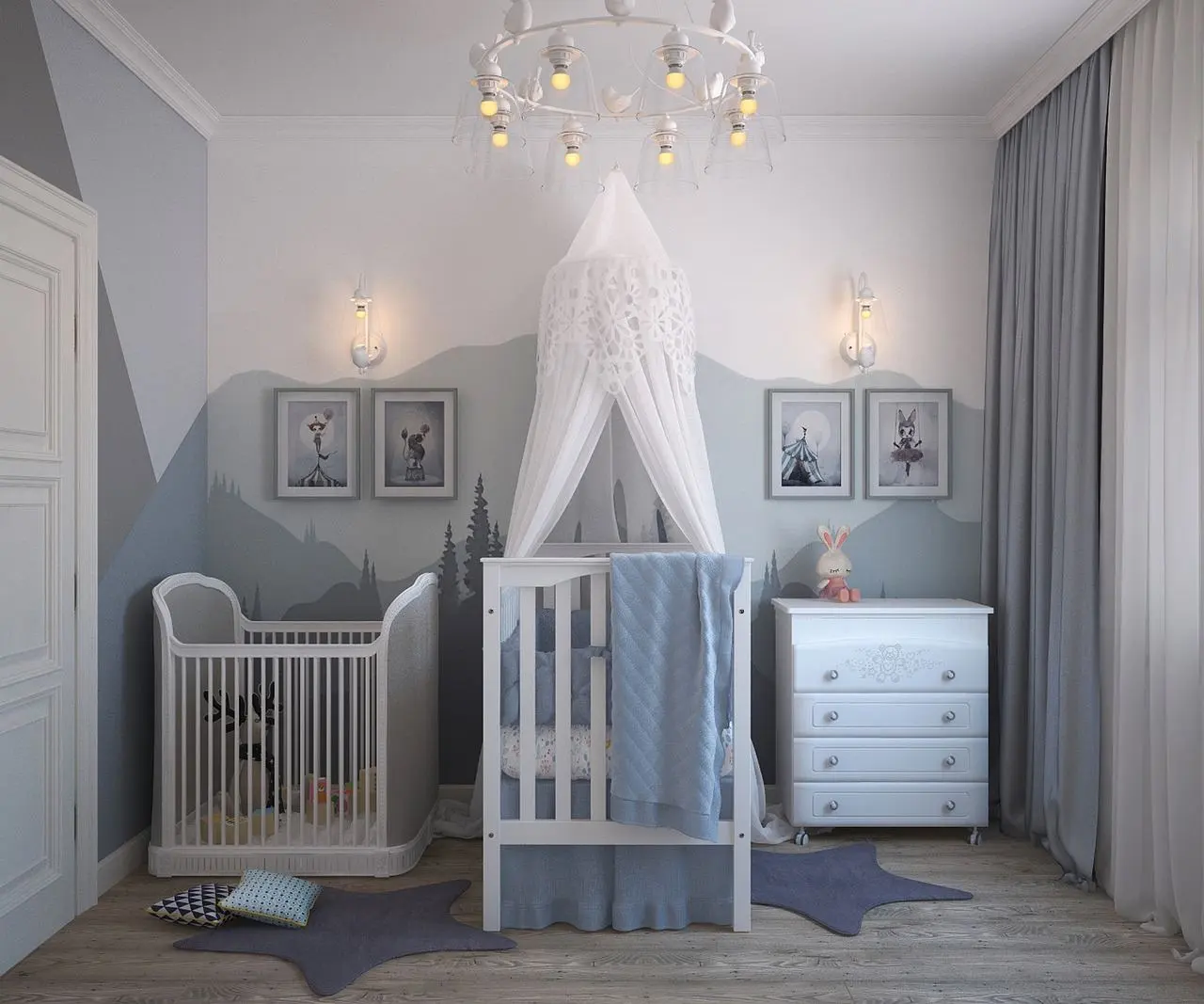
Be careful with walls above the crib. The AAP guidance says picture frames and mirrors over cribs are injuries waiting to happen, and it suggests keeping that wall to paint or wallpaper. Put shelves and framed art on the far side of the room instead.
Buying secondhand is common when space and budget are both tight. Nationwide Children’s recommends the 4 Rs: research the product, check for recalls, register it and read the manual.
Calm color and light for compact rooms
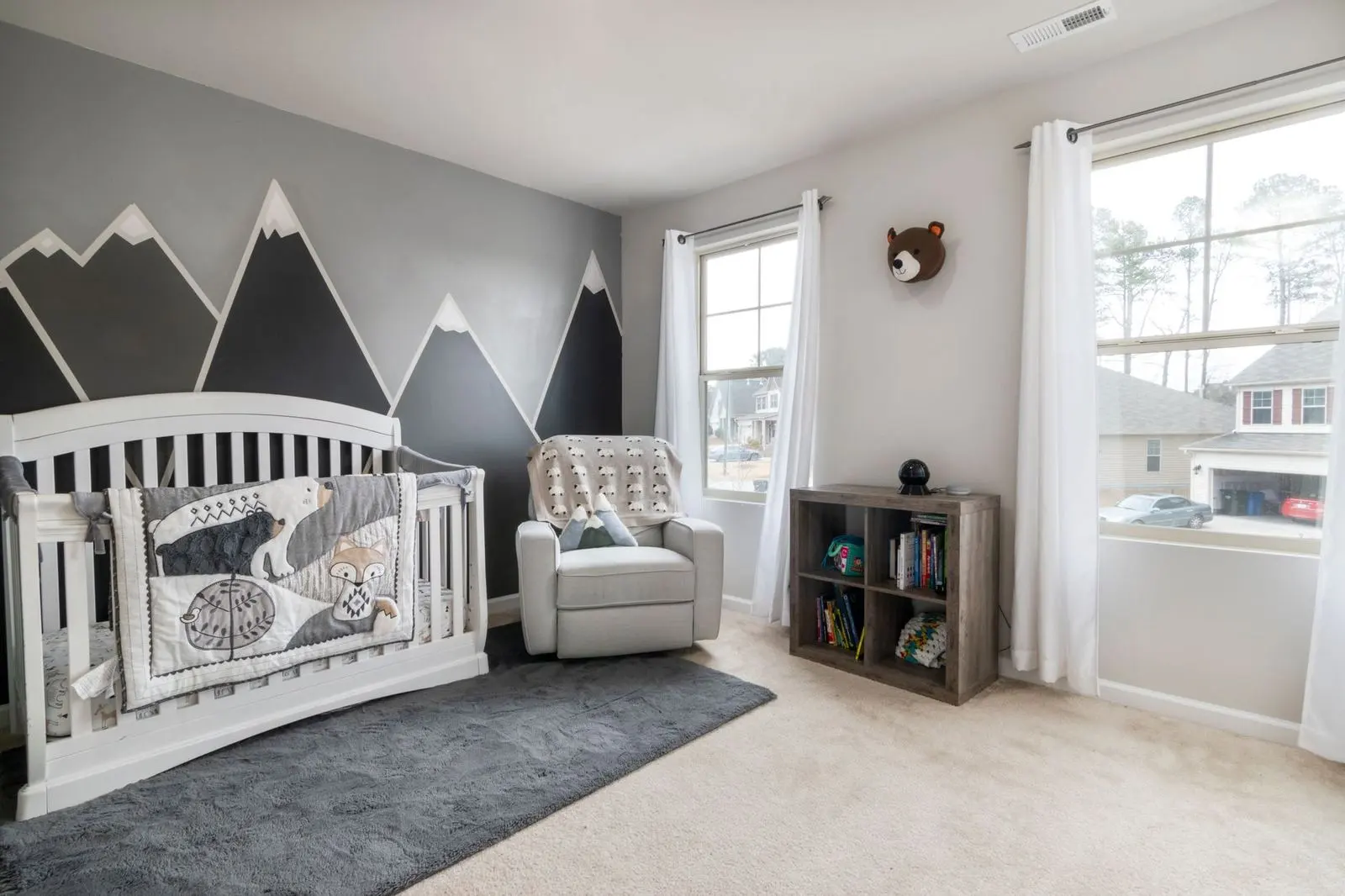
Soft, low-contrast colors make a small room feel open, and a single painted wall can replace the wall art you should keep away from the crib. Pale walls with warm wood and woven textures give the room character without crowding it.
The guide to nursery color schemes goes deeper on palettes if you want more options. If you would rather skip themed decor, the gender neutral nursery ideas page is a helpful companion for a look that grows with your family.
Choose accents that sit on surfaces rather than hang over the crib, such as a soft rug, a lamp with a safely tucked cord, or a basket of books on the dresser.
What to leave out of a small nursery?
A tiny room tempts you to add cozy extras, but the AAP guidance recommends nothing but a snugly fitted sheet in the crib during the first year. That rules out several popular items:
- Crib bumpers and pillows
- Stuffed animals and most toys
- Loose blankets, which sleepers or sleep sacks can replace
Skip inclined sleep products too. The AAP’s safe sleep guide says any surface that inclines more than 10 degrees is not safe for sleep, and it warns against using products that are not marketed for infant sleep.
Hanging mobiles are optional, and Nationwide Children’s advises taking them down when a baby can get up on all fours. Check the latest nursery safety guidance for details, and talk to your pediatrician about any sleep question.
Frequently asked questions
Can the crib sit next to a dresser in a small room?
Show answer
Leave enough distance that your baby cannot grab what is on top once they start reaching. The AAP sleeping sites guidance frames that gap as an arm’s reach.
Is a bassinet or play yard fine when floor space is tight?
Show answer
Yes, if it meets Consumer Product Safety Commission standards and has not been recalled. The AAP safe sleep guide lists cribs, bassinets, portable cribs and play yards as suitable choices and advises checking recalls, especially on older gear.
When should the mobile come down?
Show answer
Nationwide Children’s puts the timing at around 5 months of age, or whenever your baby can push up on all fours. See its nursery safety page for the full list of crib tips.
Can a nursing pillow or cozy lounger double as a sleep spot?
Show answer
No. The AAP names Boppy pillows and Dock-a-Tots as examples of items that are not made for infant sleep, so keep them for supervised, awake time.