Choosing nursery color schemes feels big when you’re nesting, but it comes down to light, mood and safe paint. Start with two or three soft shades, test them on your wall, then pick a low-VOC formula.
This guide is part of our collection of nursery ideas, so browse there for more ways to style the room.
| Item | Value |
|---|---|
| Federal VOC limit, flat (matte) paint | 250 g/L |
| Federal VOC limit, non-flat paint | 380 g/L |
| California zero-VOC paint limit | Less than 5 g/L |
| Lead check for older homes | Houses built before 1978 |
| Estimated time to paint a nursery | 5-6 hours |
These figures come from WebMD’s baby-safe paint guide (medically reviewed June 2025) and This Old House. Limits and guidance can change, so check the source before you rely on them.
Start with light, mood and theme
Before you fall for a swatch, look at the room itself. Natural light changes how every color reads, so note which way the window faces and when the room is brightest. This Old House names light, mood and theme as the variables to weigh when you choose a nursery color.
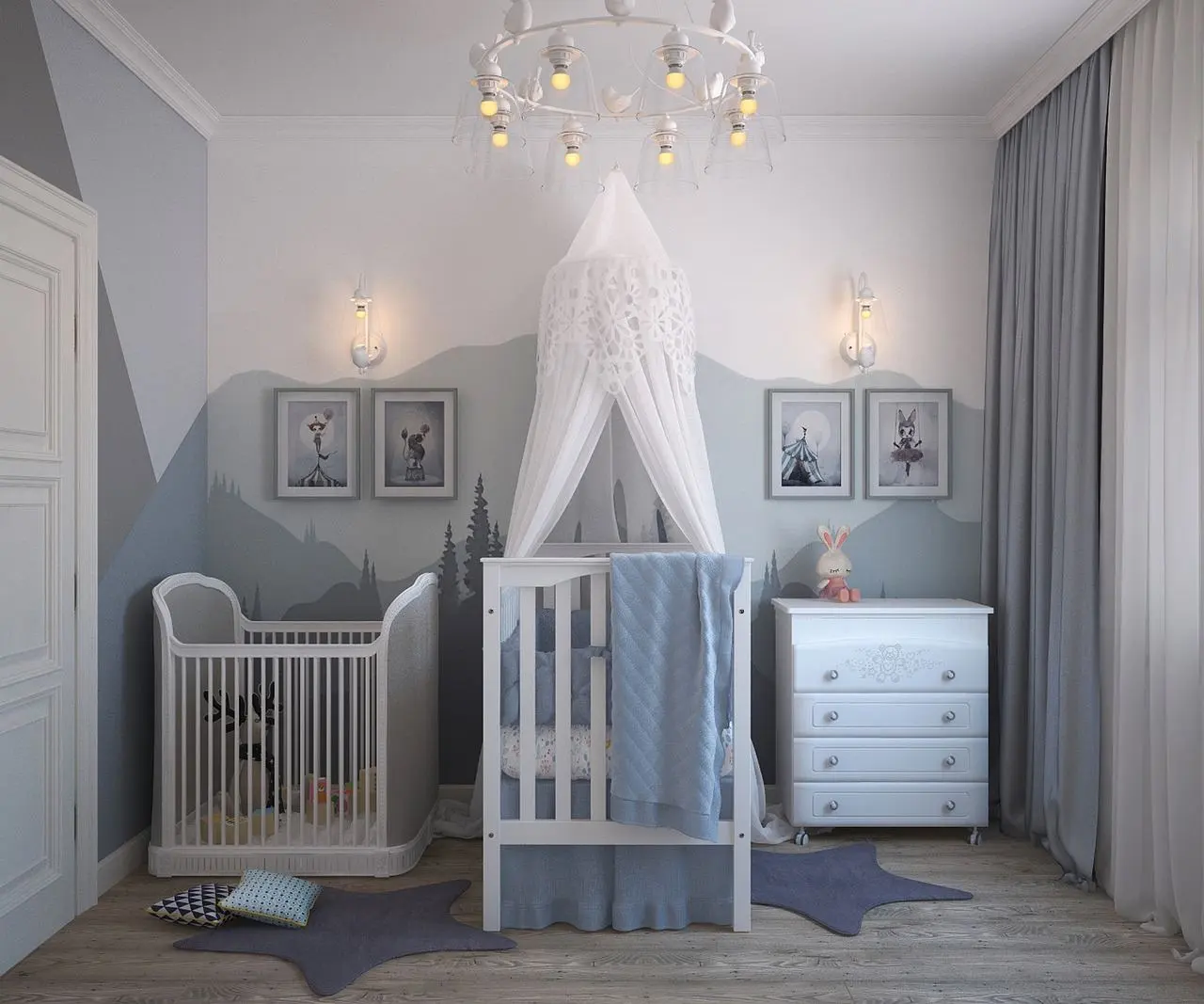
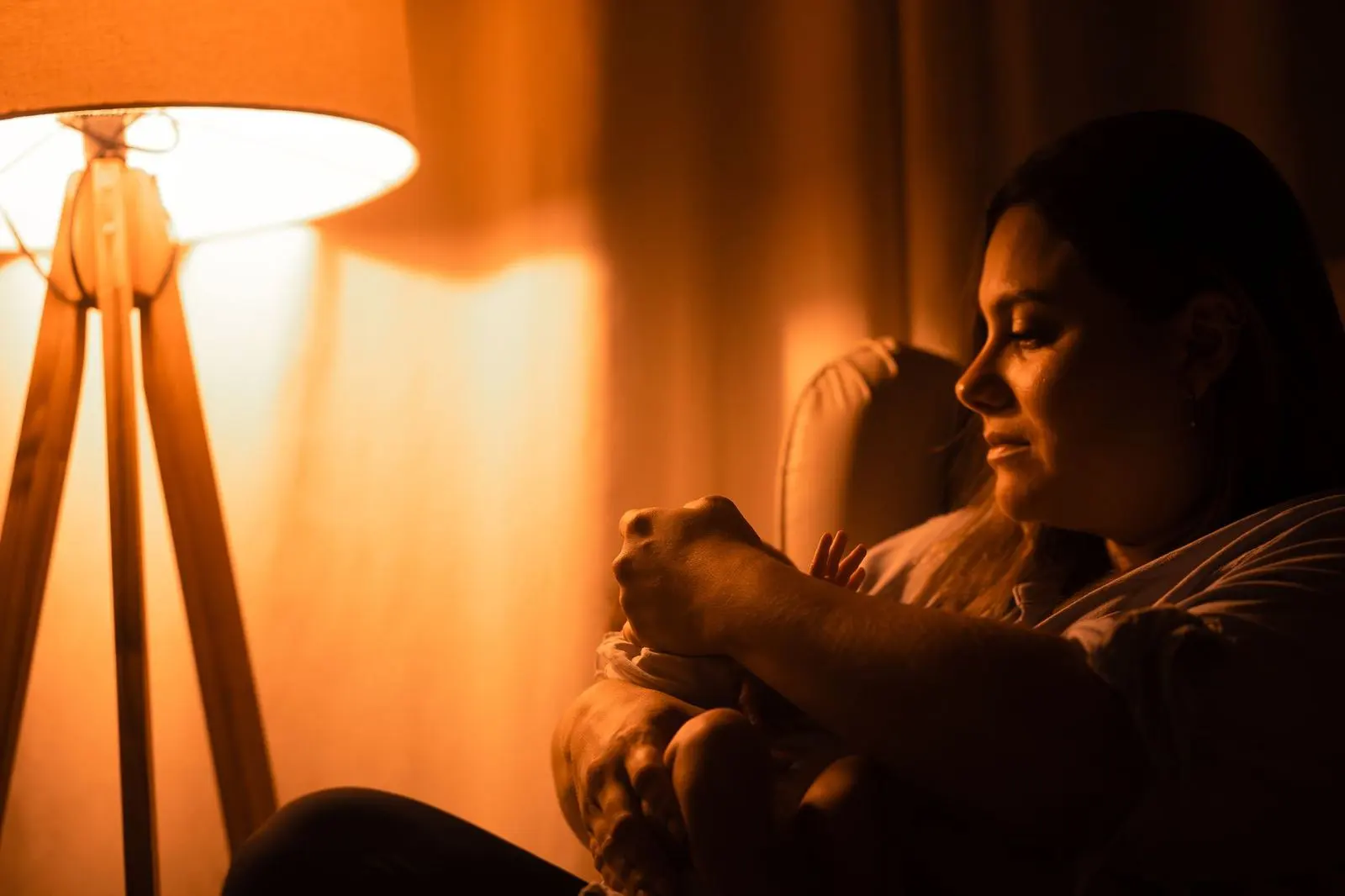
For mood, the same guide suggests colors that soothe and relax, such as soft, pastel blues and greens. Theme matters too: if you already love a pattern, an animal print or a piece of art, let the wall color support it rather than compete with it.
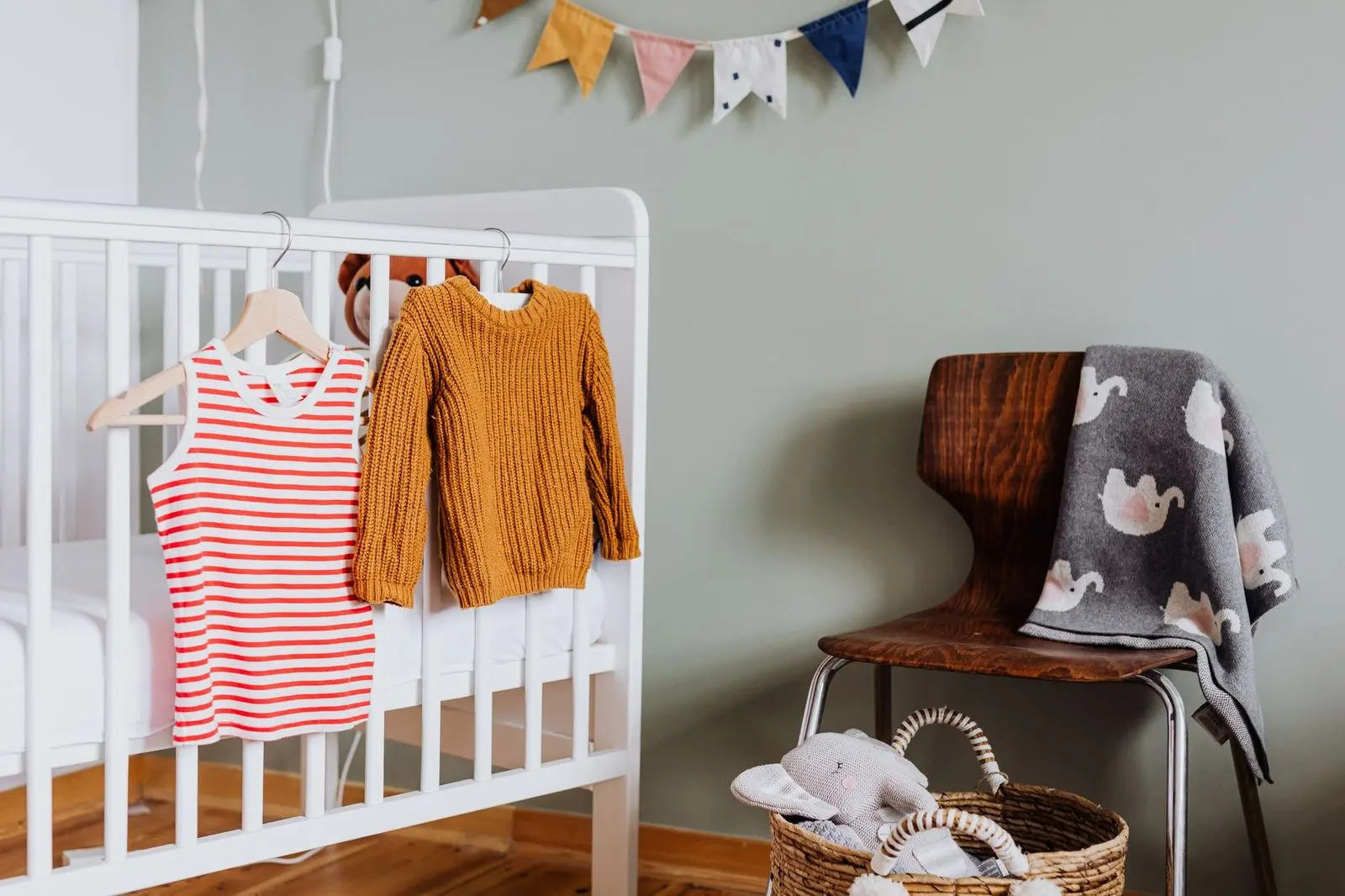
Nursery color families to consider
The paint maker Clare sorts its nursery shades into four moods, and the same groupings work as a way to organize any palette, according to its nursery paint page. This guide cites Clare for its color descriptions only: it is a paint seller, not an independent reviewer.
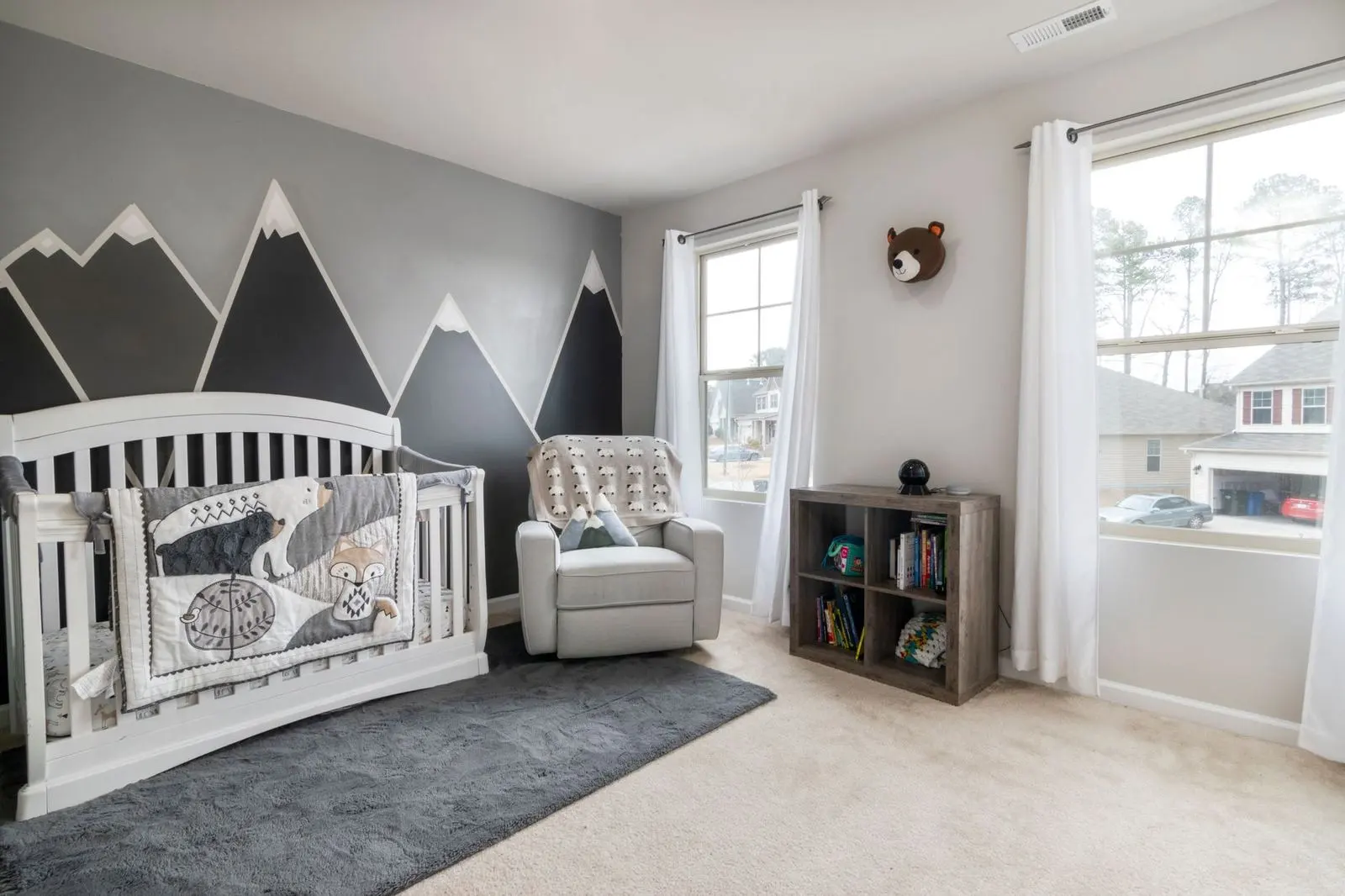
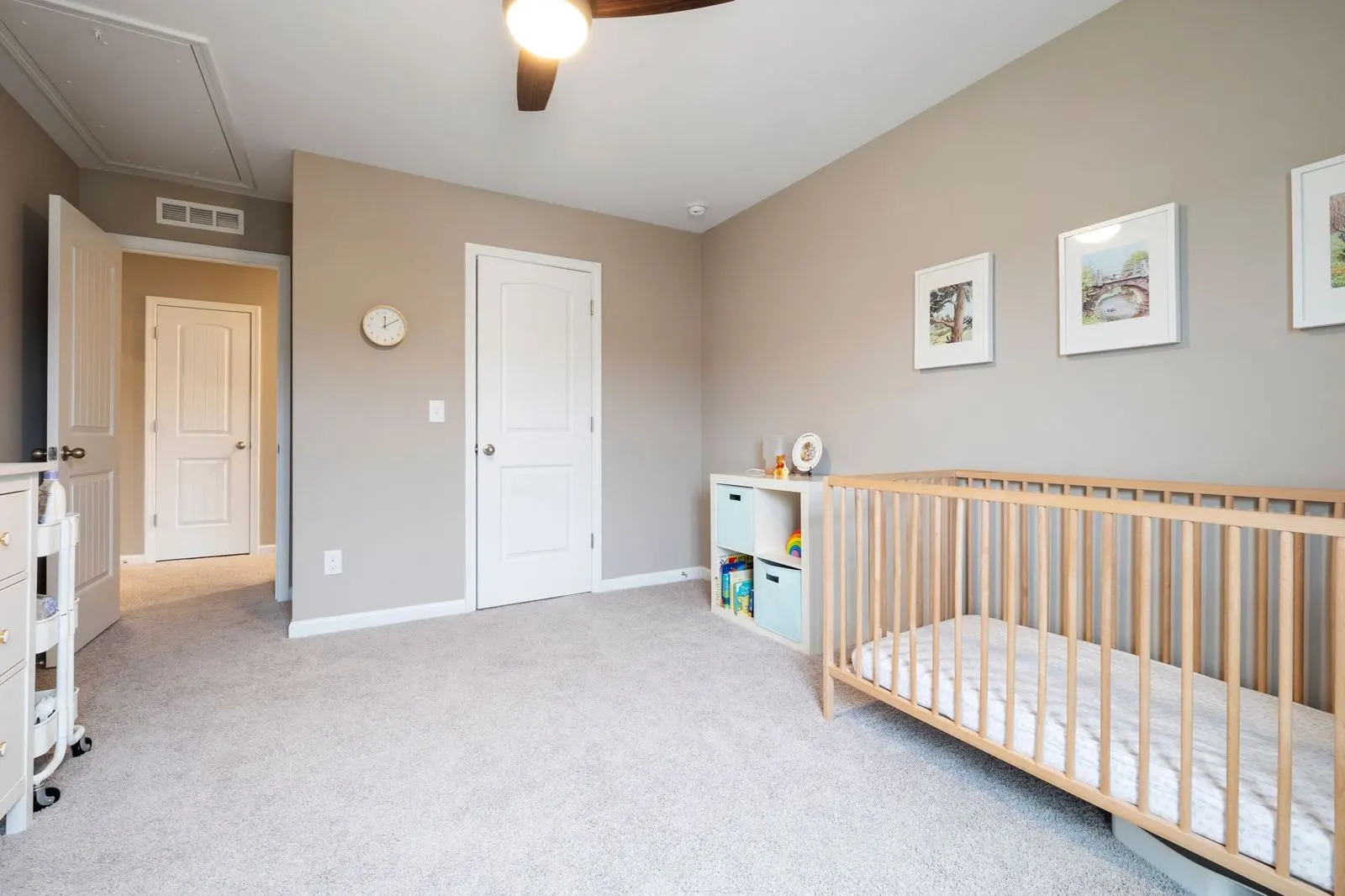
- Calm neutrals: soft whites, greens and greiges. Clare says these make a quiet backdrop that won’t compete with patterned textiles, wall art or wood furniture.
- Soft blues: dusty or slightly warmer muted tones that pair with natural wood, white trim and most crib bedding.
- Soft greens: sage, moss and botanical tones. Clare notes that green rooms tend to age well because the shade reads sophisticated rather than juvenile.
- Warm and soft: pale pinks, blush, peach and buttery yellow, which add warmth without overwhelming a small space.
If your room is compact, read our small nursery ideas before you settle on a palette.
Build a palette that grows with your child
A reliable approach is one main wall color, one supporting shade and a small number of accents. Keep the wall quiet and put bolder color into things that are easy to swap, like bedding, art and a rug. Clare points out that its neutral shades carry over as a baby grows into a toddler, which is one reason a calm base pays off.
- Pick the wall color first, using real swatches rather than a screen.
- Choose bedding and a rug that complement the wall instead of matching it exactly.
- Let wood furniture and white trim do some of the work, since soft blues pair well with both.
- Add one or two accents in art or textiles, and hold back on anything you’d hate to repaint.
Once you have a palette, our nursery layout ideas can help you decide where an accent wall will actually be seen.
Always test before you commit. Clare advises checking swatches in morning and evening light, because soft blues and greens shift with the light through the day.
How do you choose safer paint for your colors?
Color is the fun part, but the formula deserves equal attention. WebMD advises choosing low-VOC or zero-VOC paint to keep a baby’s room safe, and picking water-based paint over solvent-based or oil-based types. It also says that if you’re pregnant, it’s best to avoid exposure to any paint.
VOC rules vary by place. As of WebMD’s June 2025 review, federal regulations cap VOCs at 250 g/L in flat paint and 380 g/L in non-flat paint, while California sets low-VOC paint at no more than 50 g/L and zero-VOC at less than 5 g/L, per WebMD. The same page cautions that paint labeled zero-VOC may not be completely free of VOCs.
Read the label for extras, too. Paint additives can protect against mildew, but WebMD notes they can cause problems for people who are sensitive to them.
Certifications can help you narrow the field. WebMD lists Greenguard Gold, Green Seal and Master Paint Institute Green Performance as marks to look for, and Clare says Greenguard Gold certification requires annual testing against more than 360 VOCs and chemicals.
Finish, prep and timing
Finish affects both the look and the cleanup. This Old House describes eggshell as a soft shine that’s easy to clean, satin as shinier and wear-resistant, and semi-gloss as the shiniest and lowest maintenance, in its nursery painting guide. Clare suggests an eggshell finish on walls and semi-gloss on trim and anything you’ll wipe down often.
The same This Old House guide estimates 5-6 hours for the job. Plan a longer window overall, because drying and airing out take extra time.
- Lead: if the house was built before 1978, This Old House says to test for lead paint with a kit and call an expert if it turns up.
- Airflow: even with a zero-VOC, low-odor paint, Clare advises ventilating the room while you work.
- Curing time: a designer quoted by Homes & Gardens calls adequate curing time the most critical factor in making paint safe for a child’s room.
If you have health questions about fumes, ask your pediatrician. WebMD’s baby-safe paint guide explains why babies and young children are more susceptible to paint fumes.
Frequently asked questions
Can nursery color schemes be gender-neutral?
Show answer
Yes. Soft whites, sage greens and greiges are easy starting points, and Clare describes soft blues as reading gender-neutral too. Add personality through textiles and art.
Is zero-VOC paint completely free of VOCs?
Show answer
Not always. WebMD warns that a zero-VOC label doesn’t guarantee a total absence, so combine a certified paint with open windows and plenty of drying time.
What if my home is older and may have lead paint?
Show answer
Test before you paint. This Old House says a lead testing kit is sold at home centers and hardware stores, and that a positive result is the moment to call an expert.
Should I paint before the baby arrives?
Show answer
If you can, yes. Clare recommends finishing the paint before the baby arrives so the room is fully ready, which also leaves time for it to air out.