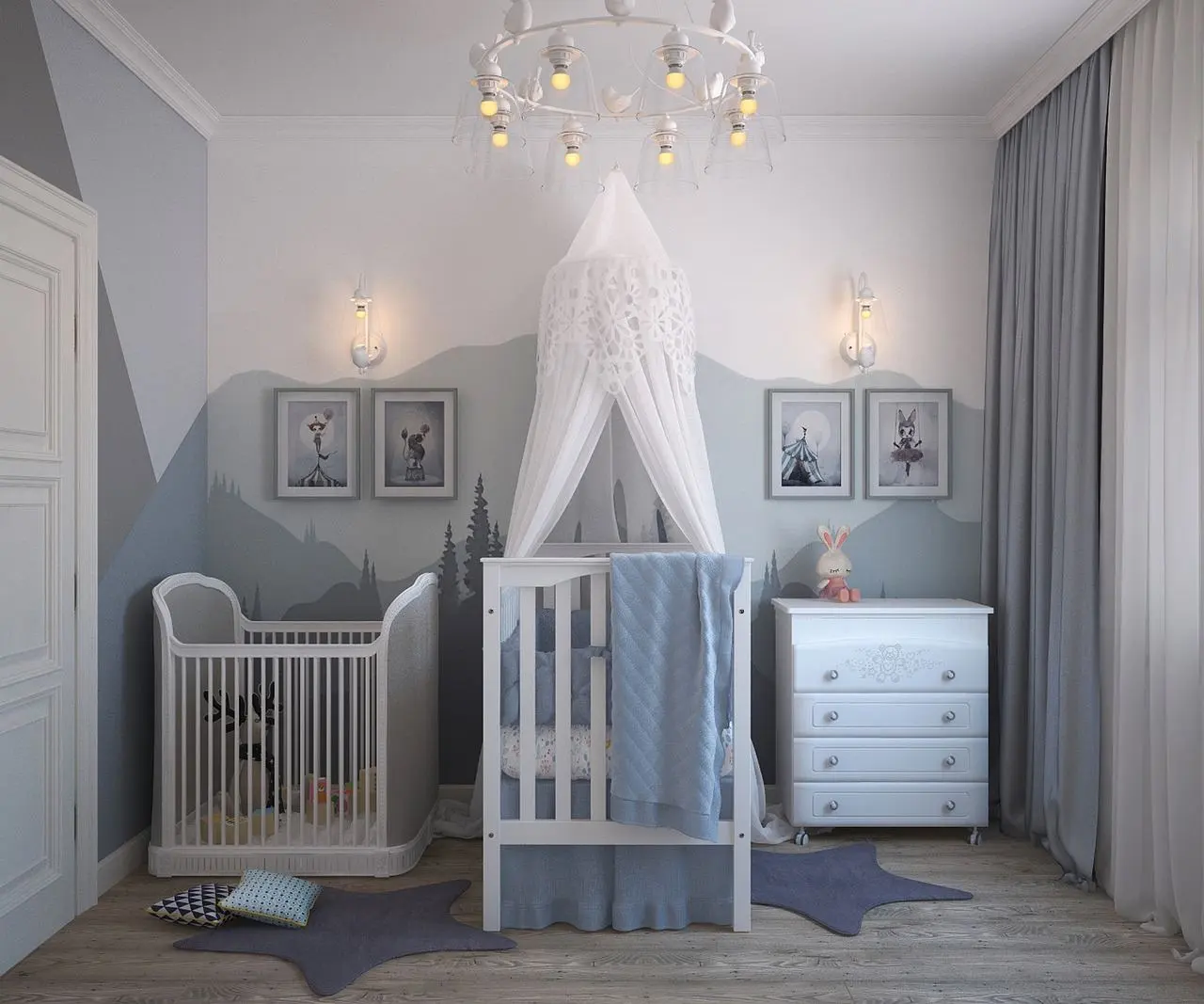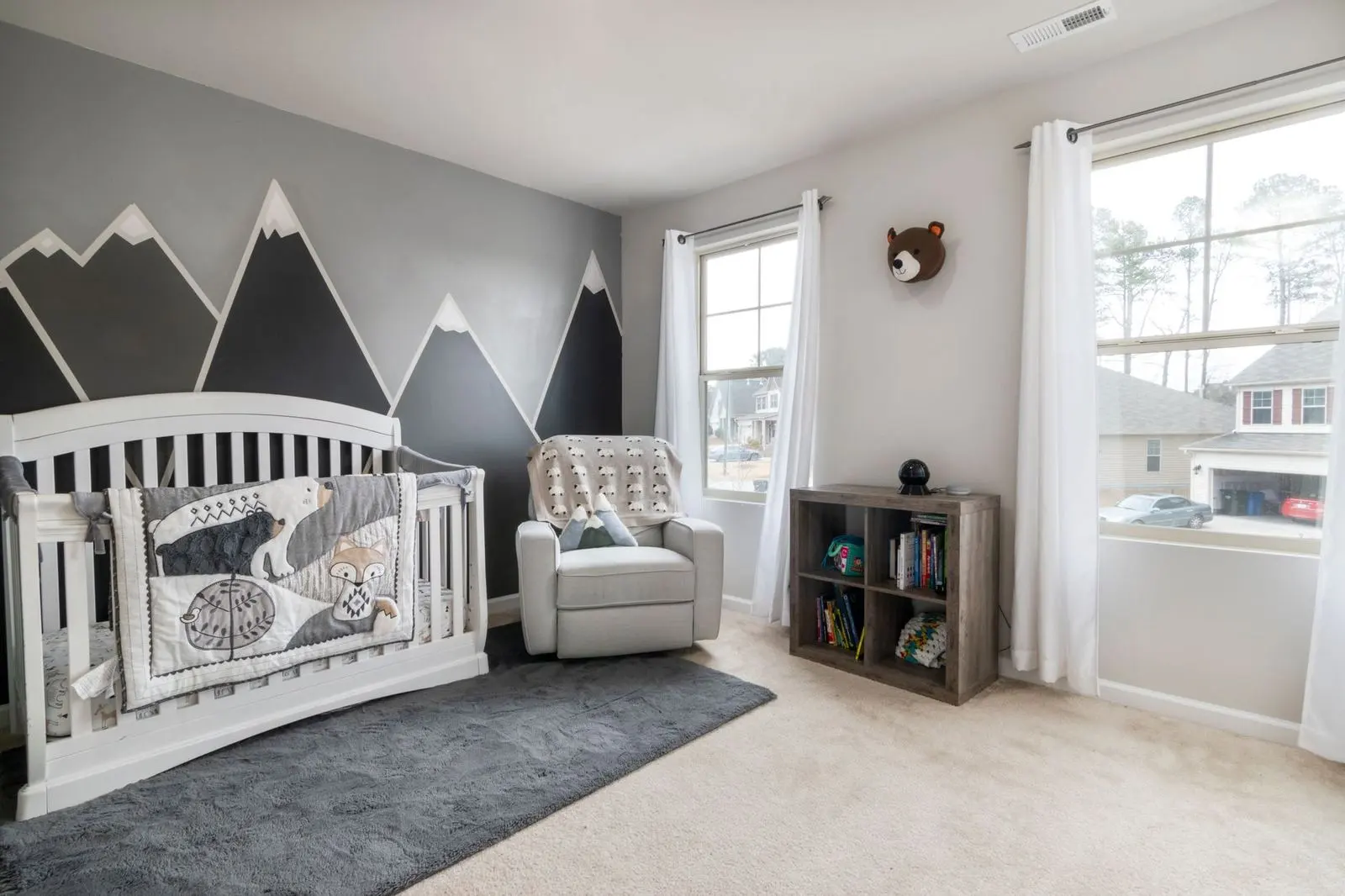
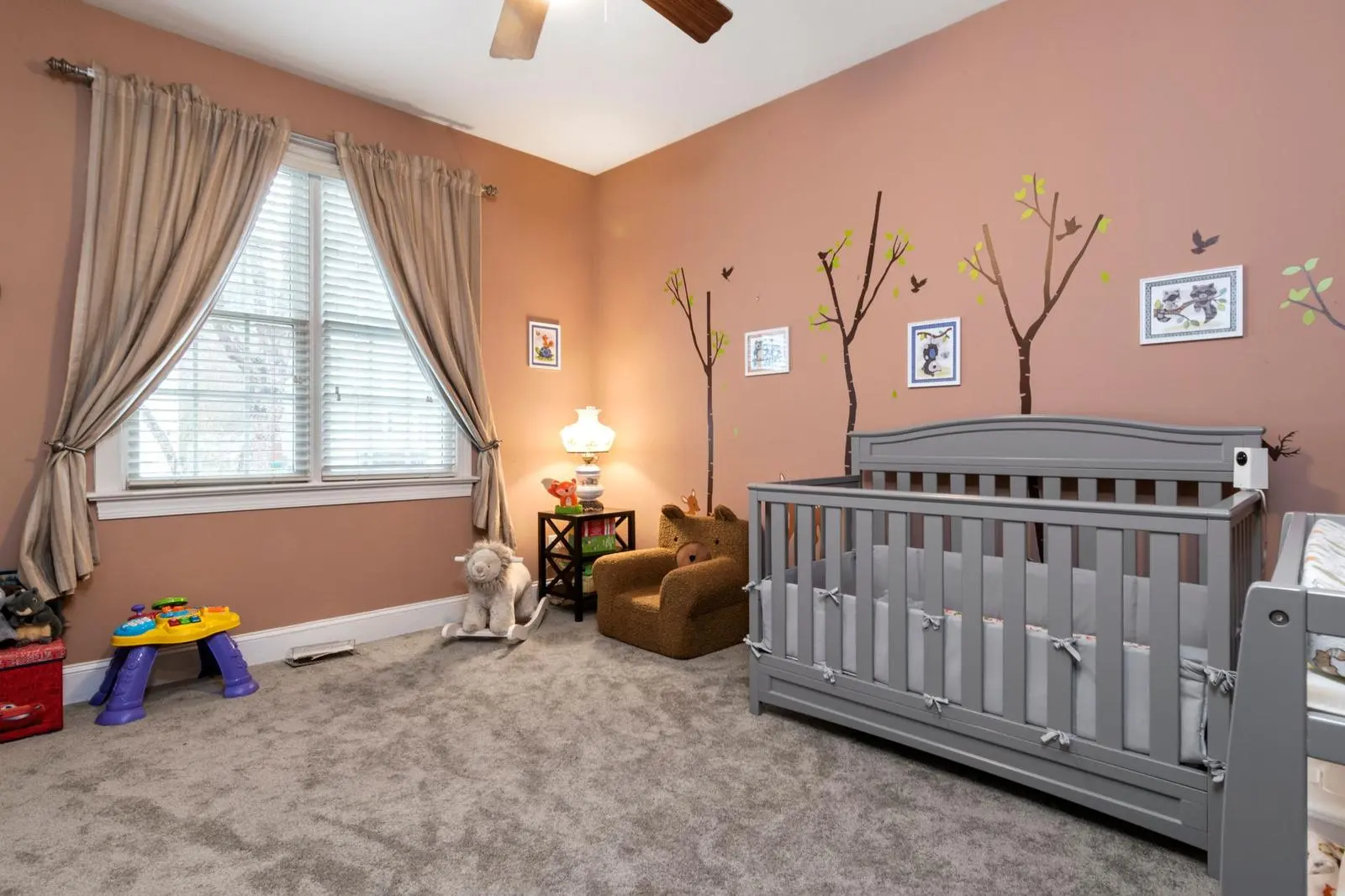
Staring at an empty room and a flat-packed crib? The best nursery layout ideas start with the crib: keep it away from windows and beyond arm’s reach of dressers, then arrange the chair and changing spot around it.
If you are still gathering inspiration for the whole room, browse more nursery ideas beyond the floor plan.
| Layout item | Guideline |
|---|---|
| Crib slat spacing | No more than 2-3/8 inches apart |
| Crib position | Well away from windows and no less than an arm’s reach from dressers or tabletops |
| Room sharing with your baby | At least the first 6 months |
| Sleep surface incline | Anything inclined more than 10 degrees is not safe for sleep |
These figures come from the AAP’s HealthyChildren.org pages on suitable sleeping sites and a parent’s guide to safe sleep. Guidance can change, so check the source before you rely on them.
Start with the crib, because everything else works around it
Place the crib first. Every other piece of furniture is easier to position once you know where the baby sleeps. The AAP’s advice on suitable sleeping sites is to set it well away from windows and no less than an arm’s reach from any nearby dressers or tabletops.
The reasoning is practical: once a baby is on the move, anything within reach becomes fair game. The same page suggests keeping over-the-crib decoration to painted walls and wallpaper, and it warns that picture frames and mirrors above a crib are injuries waiting to happen. If paint is your main decoration, the guide to nursery color schemes can help you settle on a palette.
Before you commit to a spot, walk the wall with this short checklist:
- Windows: keep the crib well away from them, as the AAP’s sleeping sites advice puts it.
- Cords: no blind cords, wires or strings hanging in or near the crib.
- Furniture: leave a gap between the crib and any dresser so nothing is within a curious grab.
- Walls: skip frames and mirrors overhead.
Where should the changing area go?
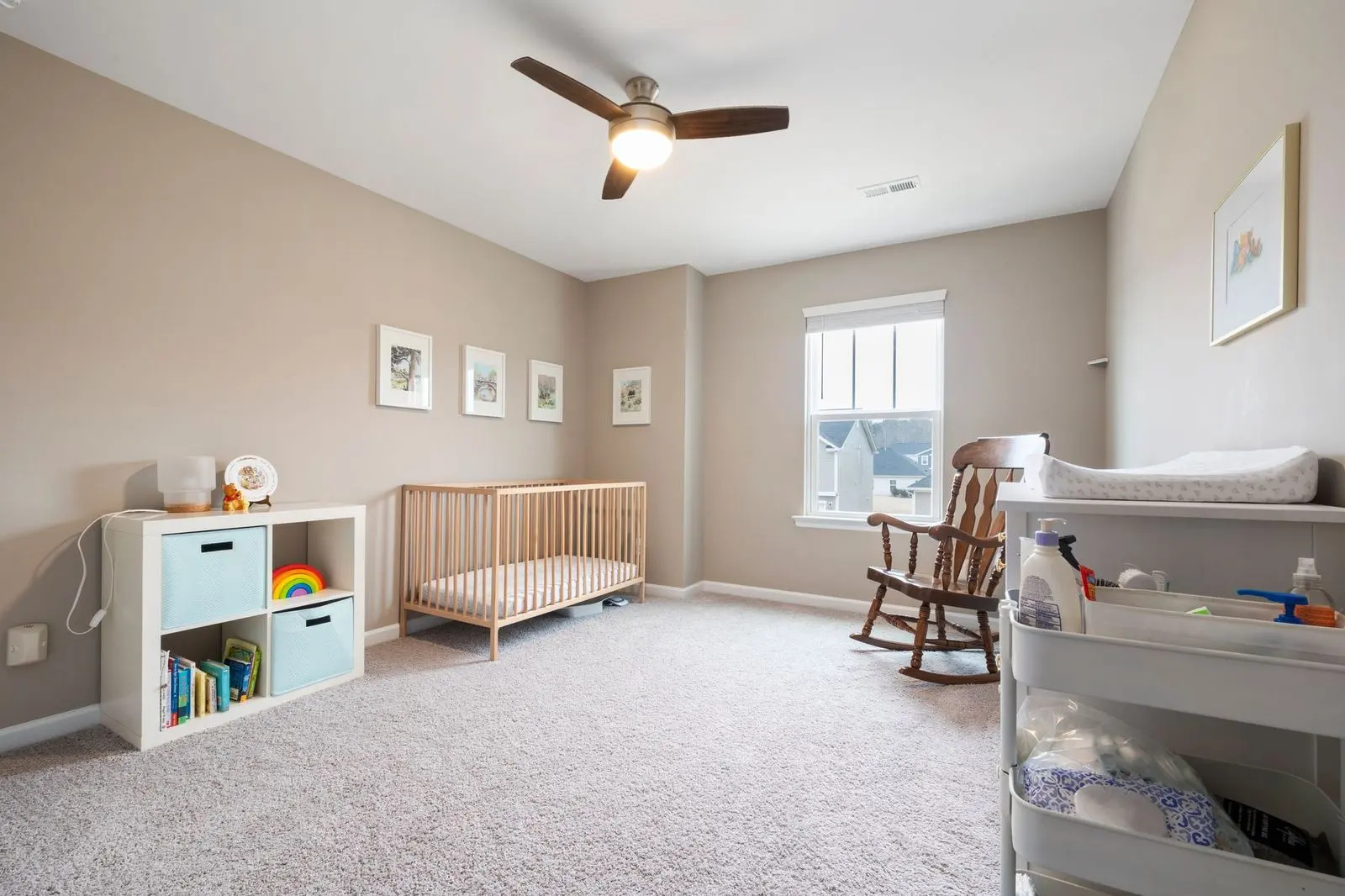
Put the changing area where diapering supplies sit within your reach but outside the baby’s, so you never have to step away mid-change. That is the AAP’s own approach to supplies, and it shapes where shelves and caddies belong.
The AAP checklist on making a baby’s room safe describes a sturdy, stable changing table with a 2-inch guardrail around all four sides. It adds that the safety strap is not enough on its own and that a hand stays on your baby throughout. If a dresser will double as the changing spot, judge it by the same standard.
- Choose a wall with enough floor space that you can stand squarely in front of the surface.
- Keep wipes, diapers and creams on a shelf or in a caddy that adults can reach and a baby cannot.
- Keep it away from the window and its cords, just like the crib.
Handy but tidy supply storage is a topic of its own, covered in the guide to nursery storage ideas.
Where does the chair fit best?
Aim to put the chair on the side of the room with the clearest path between the door and the crib. Leave space beside it for a small table or basket, so a glass of water and a burp cloth do not end up on the floor. A chair that blocks your route to the crib will get in the way during every night feed.
Treat the chair as a place for feeding and cuddling, not sleeping. The AAP’s safe sleep guidance says never to put a baby to sleep on an armchair or sofa, and it asks parents not to doze off in one while holding their baby. When your baby drifts off, the crib is the place to go.
If you add a reading lamp or sound machine beside the chair, run its cord along the wall and well clear of the crib. The AAP checklist is clear that strings and cords should not dangle in or anywhere near the crib.
Setting up when you share your room at first
The AAP recommends room sharing, not bed sharing, for at least the first 6 months, according to its parent’s guide to safe sleep. The AAP’s SIDS prevention page prefers up to 1 year of age and asks you to keep the crib or bassinet within an arm’s reach of your bed. In practice, the nursery crib may not be used right away, so plan a safe sleep corner in your own bedroom as carefully as the nursery.
A crib, bassinet, portable crib or play yard that meets Consumer Product Safety Commission standards is the kind of sleep space the guide names. It also says any surface that inclines more than 10 degrees is not safe for sleep, which rules out many soft loungers and nests. Even in a small bedroom, bed sharing is not part of the plan: the AAP advises avoiding it under any circumstances, including with twins and other multiples.
Plan the crib for the months ahead
A crib is in the room for years, so lay it out with growth in mind. Many cribs have an adjustable mattress height, and the AAP authors note you may prefer the highest level while a newborn is relatively immobile, because it saves strain on your back, according to their sleeping sites advice.
Lowering comes soon after. The AAP checklist says to lower the mattress before your baby can sit, and to set it at its lowest position before your child learns to stand. Leave enough room on the side you use that you can still reach comfortably as the baby grows.
- Take any crib mobile down once your baby can sit up.
- Check that the mattress fits snugly; if you can insert more than two fingers between mattress and crib sides, that combination should not be used.
- Keep dressers and shelves beyond a baby’s reach as grabbing skills develop.
A simple order for placing furniture
When the room feels overwhelming, work in this order and the pieces tend to fall into place:
- Mark the windows, doors, outlets and any blind cords, so you know what to avoid.
- Place the crib on a wall away from the window, with a gap to other furniture.
- Set up the changing area where supplies are close to you but out of the baby’s reach.
- Add the chair on the side with the clearest path to the crib.
- Finish with storage and wall color, then recheck every cord.
Revisit the layout whenever your baby reaches a new stage, such as sitting or standing, because the safest spot for each piece can change.
Frequently asked questions
When should my child move out of the crib?
Show answer
The AAP checklist ties the move to height: a child should go to another bed at 35 inches tall, or when the rail sits below roughly nipple level on them. Climbing out is when many falls happen, so do not wait until your toddler has already tried it. Source: HealthyChildren.org.
Do I need a dedicated changing table?
Show answer
That is your call. The AAP checklist focuses on how a changing surface is built and used rather than on owning one, so any setup should be sturdy, guarded and never left unattended.
Can I use an older or hand-me-down crib?
Show answer
Check its age and recall status first. The AAP checklist points to cribs made after June 2011, when the standards banning drop-side rail cribs took effect, and the safe sleep guide says to look up recalls on the CPSC website, especially for a crib that is not new. See the AAP guide and the checklist for details.
What can go in the crib besides the mattress?
Show answer
Only a snugly fitted sheet, according to the AAP’s recommendation for the first year. Bumper pads, pillows and stuffed toys stay out, however well they match your decor, as explained on HealthyChildren.org.